

Daily Dose Of Jazz…
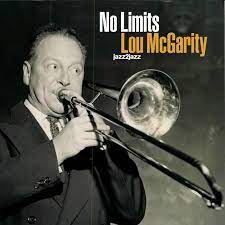
Lou McGarity was born Robert Louis McGarity on July 22, 1917 in Athens, Georgia. He started out playing violin when he was seven and didn’t switch to trombone until he was 17. He studied at the University of Georgia from 1934-36, gigged locally around the South and toured with Ben Bernie from 1938-40
He hit the big time with Benny Goodman from 1940-42, becoming the first trombonist to play both with the big band and his smaller groups. During the war years 1942-44 he worked with Raymond Scott’s Orchestra at CBS, and after military service teamed up with his friend and fellow trombonist Cutty Cutshall and rejoined Goodman in ‘46.
Lou was a busy studio musician in New York City beginning in 1947 while performing in clubs at night with Eddie Condon and playing Dixieland with the Lawson/Haggard band. He worked with Bob Crosby in the mid-’60s andwas a member of the World’s Greatest Jazz Band at the end of the 1960s. He recorded with Urbie Green, J.J. Johnson, Kenny Davern, Jimmy McPartland, Charlie Parker, Cootie Williams and Bobby Hackett among others.
Trombonist Lou McGarity, who recorded as a leader and played in the big band, swing and Dixieland genres until bad health shortened his life, transitioned on August 28, 1971 in Alexandria, Virginia.

More Posts: bandleader,history,instrumental,jazz,music,trombone

Daily Dose Of Jazz…
Örjan Kjellin was born on July 21, 1944 in Ljungby, Sweden and didn’t pick up the clarinet until the age of 15 and two years later formed his first band in partnership with pianist Lars Edegran. The band played music in the New Orleans style. He made his first records in his native Sweden at the age of 17.
Moving to New Orleans, Louisiana in 1966 he became a regular performer at several leading jazz venues including Preservation Hall. In 1968 he was a founder member of the New Orleans Ragtime Orchestra. He also led his own bands in the city including, in 1970, a band which held a residency at the Maison Bourbon Club. Two years later he formed the New Orleans Joymakers.
He recorded with several veteran New Orleans musicians including Josiah ‘Cié’ Frazier, Preston Jackson, Jim Robinson, Jabbo Smith, Zutty Singleton and Kid Thomas Valentine. In 1978, Örjan played with NORO for the soundtrack of the movie Pretty Baby. The following year he appeared in New York City as musical director, co-arranger and on-stage clarinetist with the stage musical One Mo’ Time.
In the early 80s he appeared with the same show during its long and successful run in London’s West End. Kellin has toured extensively with his own bands and with bands formed largely from New Orleans veterans. In 1992 he made his first solo tour of the UK.
Clarinetist Örjan Kjellin, a gifted and highly musical player who is known to the jazz world as Orange Kellin, continues to fan the flames of the music of New Orleans.
More Posts: arranger,bandleader,clarinet,history,instrumental,jazz,music
Daily Dose Of Jazz…
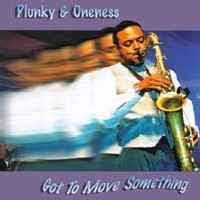
James “Plunky” Branch was born on July 20, 1947 in Richmond, Virginia and educated in the city’s segregated schools. He then attended Columbia University in New York City, but by 1971 he had moved to San Francisco, California. It was here that he formed Juju, a musical group that combined rhythm and blues, jazz, soul, and African musical influences.
He founded the band Plunky & Oneness, which began as Juju in 1971 which he renamed twice, Oneness of Juju and Plunky & the Oneness of Juju, before it was given its current name in 1988. One of Plunky & Oneness’ songs, Every Way But Loose, is featured on the video game Grand Theft Auto: Vice City Stories, playing on fictional radio station Paradise FM.
Branch is the president and founder of the independent record label N.A.M.E. Brand Records, through which he has released 25 albums. As a studio musician Plunky has worked for The Cosby Show and has appeared on several avant-garde jazz albums.
As an educator he has been Director of the Jazz Ensemble at Virginia Union University as well as an instructor of Afro-American Music History at Virginia Commonwealth University.
He has been the recipient of two NEA Jazz Fellowships and was appointed to the Governor’s Task Force for the Promotion of the Arts in Virginia. In 1999 he was recognized by Richmond Magazine as Musician of the Year for 1999. J. Plunky Branch continues to perform, record, compose and produce.
More Posts: bandleader,educator,history,instrumental,jazz,music,producer,saxophone,songwriter
Daily Dose Of Jazz…
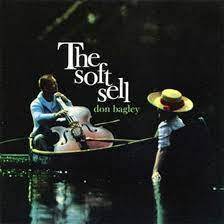
Donald Neff Bagley was born on July 18, 1927 in Salt Lake City, Utah and received formal training on the double bass. He went on to study in Los Angeles, California and played in 1945 with Shorty Sherock and Wingy Manone, and in 1948 with Dick Pierce.
During the early Fifties from 1950 to 1953, and sporadically thereafter, Bagley played with Stan Kenton. HIs time with Kenton, A Study for Bass by Bill Russo and Bags by Bill Holman were written to feature Bagley’s playing. By 1954 he was fronting his own ensembles. His session work between 1950 and 1952, Don worked extensively with Nat King Cole, Maynard Ferguson, and Dexter Gordon. He played in Europe with Zoot Sims, Lars Gullin, Frank Rosolino, and Åke Persson. He would go on to work with Les Brown, Jimmie Rowles, Shelly Manne, Pete Fountain and Phil Woods. In 1957 and 1958, he recorded three albums under his own name.
The Sixties saw him playing with Ben Webster and Julie London. Into the 1970s and 1980s he worked with Burt Bacharach while composing and arranging for film and television, including the scores to Mama’s Dirty Girls, The Manhandlers, The Swinging Barmaids, The Student Body, Young Lady Chatterley and Sacred Ground.
Double bassist, composer and arranger Don Bagley transitioned of natural causes on July 26, 2012 at the age of 85.
More Posts: arranger,bandleader,bass,composer,history,instrumental,jazz,music
Daily Dose Of Jazz…
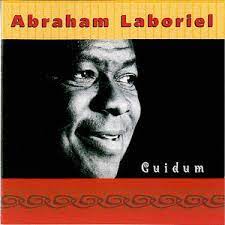
Abraham Laboriel López was born on July 17, 1947 in Mexico City, Mexco into a talented family with a rock singer brother and a sister who is a singer, film and television actress. A classically trained guitarist, he switched to bass guitar while studying at the Berklee College of Music, graduating in 1972.
It was during this time that he learned the importance of versatility as a musician. Henry Mancini encouraged Laboriel to move to Los Angeles, California, to pursue a recording career, which he did in 1976. Though he struggled to find work for two years, he found his first gig on a road tour with Olivia Newton-John. After a consequent European tour with Al Jarreau, he settled into a full-time studio career in Los Angeles.
He would go on to work and record with Al Jarreau, Billy Cobham, Freddie Hubbard, George Benson, Herbie Hancock, Lalo Schifrin, Gary Birton, Stan Getz, Larry Carlton, Lee Ritenour, Quincy Jones, Randy Crawford, Dave Grusin, and Umberto Tozzi as well as Stevie Wonder, Michael Jackson, Barbra Striesand, Madonna, Andre Crouch, Herb Alpert Minnie Riperton, Barry Manilow, and many others.
Abraham was a founding member of the bands Friendship and Koinonia. With the latter he recorded four albums. In addition he recorded several solo albums on which he recruited a cast of musicians that included Alex Acuña, Al Jarreau, Jim Keltner, Phillip Bailey, Ron Kenoly, his son Abe Laboriel Jr. on drums, and others.
In 2005, he was awarded an Honorary Doctorate of Music by the Berklee College of Music. Electric bassist Abraham Laboriel has played on over 4000 recording sessions, is ranked No. 42 on Bass Player magazine’s list of The 100 Greatest Bass Players of All Time, and continues to record and perform as a member of the band Open Hands with Justo Almario, Greg Mathieson, and Bill Maxwell.
More Posts: bandleader,bass,history,instrumental,jazz,music