

Daily Dose Of Jazz…
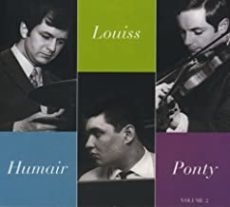
Daniel Humair was born May 23, 1938 in Geneva, Switzerland and played clarinet and drums from the age of seven and won a competition for jazz performance in his teens. By the time he was twenty he was in Paris, France accompanying visiting musicians with his most celebrated season with tenor saxophonist Lucky Thompson at a club called Le Chat Qui Pèche.
Humair became the drummer American musicians would ask to work with, despite a gig with the Swingle Singers in the early 60s. In 1967 he played on violinist Jean-Luc Ponty’s debut Sunday Walk, also contributing the title track. When alto saxophonist Phil Woods emigrated to Paris in 1968 it was natural that Humair should be the drummer in what Woods called the European Rhythm Machine.
In 1969 he won the Downbeat critics’ poll as Talent Deserving Wider Recognition. Humair was so in demand that his job-sheet reads like a list of the pre-eminent names in jazz, Herbie Mann , Roy Eldridge, Stéphane Grappelli, Chet Baker, Michel Portal, Martial Solal, Dexter Gordon, and Anthony Braxton all availed themselves of his graceful, incisive drums. He played with Gato Barbieri on the soundtrack to Last Tango In Paris in 1972.
In 1986, Daniel’s record Welcome on Soul Note, a record which listed all members of the quartet as leaders, was a perfect demonstration of his warmth and responsiveness as a drummer and continued to top drum polls in France well into the 90s. In 1991, Surrounded documented a selection of his work from 1964-87, including tracks with legends such as Eric Dolphy, Gerry Mulligan and Johnny Griffin – a neat way of giving Humair centre-stage and celebrating the breadth of his involvement with jazz history.
To date he has recorded more than four-dozen albums as a leader, became a Chevalier of the Ordre des Arts et des Lettres in 1986 and Officier in 1992. A talented painter, he describes his own work as figurative abstract. Drummer Daniel Humair continues to perform and record.

More Posts: bandleader,composer,drums,history,instrumental,jazz,music
Daily Dose Of Jazz…
Giuseppi Logan was born on May 22, 1935 in Philadelphia, Pennsylvania, who taught himself to play piano and drums before switching to reeds at the age of 12. At the age of 15 he began playing with Earl Bostic and later studied at the New England Conservatory. In 1964 he relocated to New York and became active in the free jazz scene.
Giuseppi played alto and tenor saxophone, bass clarinet, flute, piano and oboe. He collaborated with Archie Shepp, Pharoah Sanders and Bill Dixon before forming his own quartet made up of pianist Don Pullen, bassist Eddie Gómez and percussionist Milford Graves. After Pullen’s departure, pianist Dave Burrell joined the group. A member of Byard Lancaster’s band, he also toured with and appeared on recordings by Patty Waters. He recorded two albums for the ESP-Disk record label and later appeared on an album by Roswell Rudd on the Impulse! label.
Beset with personal problems, Logan vanished from the music scene in the early 1970s and for over three decades his whereabouts were unknown. In 2008 he was filmed by a Christian mission group just after he had returned to New York City after years in and out of institutions in the Carolinas. Around this same time filmmaker Suzannah Troy made the first of many short films of Logan practicing in his preferred hangout, Tompkins Square Park. Subsequently, he was the subject of a major piece by Pete Gershon in the spring 2009 edition of Signal to Noise Magazine, which detailed the events surrounding Logan’s “comeback” gig at the Bowery Poetry Club in 2009.
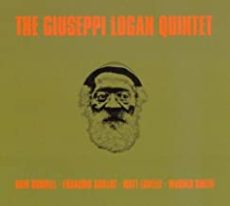
The same year he performed with a group in NYC as part of the RUCMA performance series. Later in the year he appeared in the short documentary film Water in the Boat by David Gutiérrez Camps, where his music improvisations formed the soundtrack of the film. In 2010 Giuseppi began recording again and released an album announcing his return to music on Tompkins Square Records with Matt Lavelle, Dave Burrell, Warren Smith and Francois Grillot. This group performed a concert in Philadelphia with Dave Miller playing for Warren Smith at the Ars Nova Workshop. He went on to record six songs with a group of younger experimental musicians.
Around 2011 he was shot and ended up in a home in Far Rockaway, Queens. Still living in New York and performing as a street musician, reedist Giuseppi Logan passed on April 17, 2020 at a nursing facility in Far Rockaway, Queens from COVID-19.
More Posts: bandleader,clarinet,flute,history,instrumental,jazz,music,oboe,piano,saxophone

Daily Dose Of Jazz…
Jan Leder was born in Queens, New York on May 20, 1944 and showed musical talent from an early age, tapping out melodies on the family piano at the age of three. Quickly surpassing her older siblings, at the age of five, she began six years of piano lessons with her classically trained mother. It was not until junior high school that she first picked up the flute. Formally she studied classical flute but in her free time, she taught herself to improvise rock & roll and pop/R&B tunes alongside local guitarists in New York’s Central Park.
At 17 years old Leder began studying with jazz pianist Lennie Tristano, with whom she continued until his death in 1978. Although crediting Tristano with helping her come into her own as a musician, real recognition and commercial success eluded her until the late 1990s. Her first big break came when Buddy Scott and colleagues from Monad records heard her playing in 1994 at The Dockside in Tarrytown, New York. Her tape of a live date with Art Lillard and others at the Five Spot in New York so impressed Scott, that he signed her to a Monad Records contract and released the live recording intact as the CD Passage to Freedom.
Unfortunately, Passage to Freedom, which includes some really nice work by drummer Lillard, pianist Jon Davis, bassist Yosuke Inoue, and guitarist Mark McCarron, was released just as Monad Records met its demise, leaving Leder’s debut effort largely unavailable and unnoticed for close to two years. In 1998 and 1999, exposure via the internet brought her to the attention of a wider audience and earned her very favorable reviews for Passage to Freedom.
1998 saw A-Records vocalist Diane Hubka recorded Leder’s original composition “Thinking of You” on her own debut CD, Haven’t We Met, which was nominated for a Jazz Award in the Best Debut CD category. Her contribution to Hubka’s CD ultimately led to her signing a recording contract with A-Records, a division of the Dutch label, Challenge Records. The following year she released her second CD, Nonchalant, on which she added the talents of bassist Sean Smith, percussionist Daniel Moreno, and vocalists Angela DeNiro, Mary Foster Conklin, and Cleve Douglass to the already strong instrumental talents of Passage to Freedom collaborators Lillard, McCarron, and Davis. Flutist Jan Leder continues to perform and record.
More Posts: bandleader,composer,flute,history,instrumental,jazz,music
Daily Dose Of Jazz…
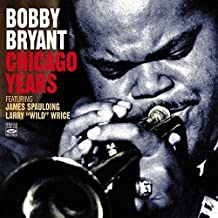
Bobby Bryant was born on May 19, 1934 in Hattiesburg, Mississippi, and played saxophone in his youth before moving on to the trumpet and then the flugelhorn. A move to Chicago, Illinois in 1952, where he studied at the Cosmopolitan School of Music until 1957. Remaining until 1960, he played with Red Saunders, Billy Williams, and other ensembles.
He relocated to New York City in 1960 and then Los Angeles, California in 1961, and became a fixture on the West Coast jazz scene. Leading his own groups, in addition, Bobby played with Vic Damone, Charles Mingus, Oliver Nelson, Gerald Wilson, Frank Capp/Nat Pierce, and the Clayton-Hamilton Jazz Orchestra. He also worked as a studio musician and a music educator.
His most famous solo was in the song “L.O.V.E” recorded with Nat King Cole in 1964. He recorded five albums as a leader, arranged two albums for Peggy Lee in 1969 and Gene Ammons in 1971, and more than two-dozen with Brass Fever, Earth, Wind & Fire, Clare Fischer, Benny Golson, Eddie Harris Richard “Groove” Holmes, Quincy Jones, Stan Kenton, B. B. King, Blue Mitchell, Oliver Nelson, Lalo Schifrin, Horace Silver, The Three Sounds, Gerald Wilson, and Jimmy Witherspoon.
Having sustained health problems which reduced his activity to part-time, trumpeter and flugelhornist Bobby Bryant passed away in Los Angeles of a heart attack at the age of 64 on June 10, 1998.
More Posts: bandleader,flugelhorn,history,instrumental,jazz,music,trumpet
Daily Dose Of Jazz…
Mike Zwerin was born in New York City on May 18, 1930, where he studied at the High School of Music and Art. He began leading bands in his teens, employing several up-and-coming musicians. He went on to attend the Univerity of Miami and after graduation, he went into his father’s business, the Capitol Steel Corporation.
At the age of 18, while on his summer holidays from the University of Miami, he was spotted by Miles Davis at Minton’s in Harlem, while sitting in with Art Blakey. He was immediately drafted into the rehearsal band for what would become immortalized as Birth of the Cool, while the regular trombonist Kai Winding was indisposed. Also present were Gerry Mulligan, Max Roach, and Lee Konitz. His contribution, in particular, his solo on the track Move, can be heard on The Complete Birth of the Cool. A few muddy recordings exist of radio broadcasts by the band during Zwerin’s time in it, which gave him a lifelong reputation as a jazz musician lucky enough to have been at the cutting edge of a new movement.
Abandoning his musical life for much of the 1950s and after a spell in France, he returned to New York in 1958 and played the trombone in several big bands. Among his other recordings are Getting Xperimental over U, and Mack the Knife, an album of Kurt Weill songs that he produced and arranged himself. He also appears on Archie Shepp’s 1968 album The Magic of Ju-Ju.
Before moving permanently to Europe in 1969, he was a jazz critic for the Village Voice and focusing on journalism, writing for Down Beat, Rolling Stone, and Penthouse before joining the Herald Tribune. Zwerin’s move to London, England in 1969 and then to Paris, France in 1972, would be his home for the rest of his life. Nevertheless, he kept his hand in as a trombonist throughout the 1980s, working with his fellow expatriate Hal Singer and with the guitarist Christian Escoudé. In 1988 he toured with the Charles Mingus Big Band, having played briefly with the Swiss bandleader George Gruntz and played with the French fusion band Telephone.
Zwerin’s lasting claim to fame, however, is, perhaps, not his trombone playing but his book La Tristesse de Saint Louis: Swing Under the Nazis (1985). He spent two years researching it, traveling across France, Austria, Poland and Germany to interview survivors and unearthing the story of how jazz was banned by the Nazis as degenerate music, and yet somehow survived as what Zwerin called a metaphor for freedom.
Cool and progressive jazz trombonist and bass trumpeter Mike Zwerin passed away on April 2, 2010 after a long illness in Paris at the age of 79.
More Posts: bandleader,critic,history,instrumental,jazz,music,trombone,trumpet