

Daily Dose Of Jazz…
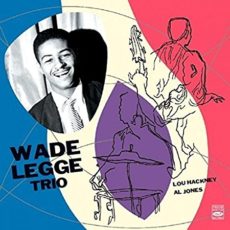
Wade Legge was born on February 4, 1934 in Huntington, West Virginia. He played more bass than piano in his early years, and it was with the bass that Milt Jackson first noticed him, recommending Wade to Dizzy Gillespie. After hiring him, Gillespie moved him to piano and he remained a member of Gillespie’s ensemble until 1954. During his Dizzy years, Legge recorded a date in France as a trio session leader.
Following his tenure with Gillespie, Wade moved to New York City and freelanced there, playing in Johnny Richards’s orchestra, and sessions with Charles Mingus, Sonny Rollins, Milt Jackson, Joe Roland, Bill Hardman, Pepper Adams, Jimmy Knepper and Jimmy Cleveland.
Legge was one of three pianists recording as a member of the variously staffed Gryce/Byrd Jazz Lab Quintets in 1957 and appeared on more than 50 recordings before retiring to Buffalo in 1959. Jazz bassist and pianist Wade Legge died on August 15, 1963 in Buffalo, New York at the age of 29.

Daily Dose Of Jazz…
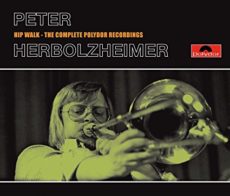
Peter Herbolzheimer was born on December 31, 1935 in Bucharest, Romania and migrated from communist Romania to West Germany in 1951.Two years later he moved to the United States, settling in Michigan and enrolled in Highland Park High School in the graduating class of 1954. There, he was a staple in the musical choral groups and orchestra, and accompanied several groups on guitar who often performed for various organisations and corporate functions around the Detroit area.
Returning to Germany in 1957 he took up the valve trombone, playing in numerous jazz cellar open mic groups. Peter attempted to return to Michigan, but his visa was denied, so for one year he studied at the Nuremberg Conservatory. In the Sixties he played with the Nuremberg radio dance orchestra and with Bert Kämpfert’s orchestra. He went on to play in the pit orchestra of Hamburg theater, then formed his Rhythm Combination and Brass for which he wrote most of the arrangements.
This big band had an international lineup of eight brass with saxophonist Herb Geller, Allan Botschinsky, Art Farmer, Dusko Goykovich, Palle Mikkelborg, Ack van Rooyen and Jiggs Whigham. The rhythm section had Dieter Reith, Philip Catherine, Niels-Henning Ørsted Pedersen, Bo Stief, Alex Riel, Grady Tate, and Nippy Noya. In the late 1970s the band toured successfully with a “jazz gala” program featuring guest stars such as Esther Phillips, Stan Getz, Nat Adderley, Gerry Mulligan, Toots Thielemans, Clark Terry, Albert Mangelsdorff, Dianne Reeves and Chaka Khan.
The Seventies and Eighties had Herbolzheimer writing music for the opening of the 1972 Olympic Games in Munich, won the International Jazz Composers Competition 1974 in Monaco and was the arranger and conductor and led his orchestra for virtually every major German television network and accompanied visiting American musicians such as Ella Fitzgerald, Benny Goodman, Sammy Davis, Jr., Dizzy Gillespie and Al Jarreau.
Between 1987 and 2006 he was the musical director of Germany’s national youth jazz orchestra, the Bundes Jazz Orchester, conducted regular workshops and clinics for big band jazz and was chosen as the music director, arranger and conductor of the European Jazz Band, which toured throughout Europe until 2009. Trombonist and bandleader Peter Herbolzheimer passed away at age 74 in Cologne, Germany on March 27, 2010.

More Posts: trombone
Daily Dose Of Jazz…
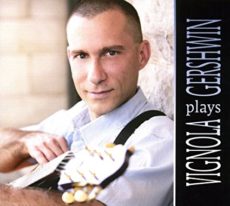
Frank Vignola was born December 30, 1965 in Long Island, New York where his father played accordion and banjo and his brother plays trumpet. When he was five, he picked up the guitar, learning from his father and from records by Django Reinhardt, Bucky Pizzarelli, Joe Pass, and Johnny Smith. At 12 he started on the banjo, and two years later he won a national championship in Canada.
He studied guitar at the Cultural Arts Center and early in his career, he went to used record stores to buy albums by musicians whose work he didn’t know, so that he could study their music. 1987, when he was 23, saw Frank forming the Hot Club quintet, named after the Quintette du Hot Club de France. In the early 1990s, a move to New York City he was playing in groups with Max Morath, Andy Stein, Herman Foster, Joe Ascione, and tuba player Sam Pilafian.
Vignola formed the Concord Jazz Collective with veteran guitarists Howard Alden and Jimmy Bruno and has worked with includes Leon Redbone, Ken Peplowski, Susannah McCorkle, Charlie Byrd, Joey DeFrancesco, Gene Bertoncini, Johnny Frigo, Bucky Pizzarelli, Wynton Marsalis, David Grisman, Jane Monheit, Mark O’Connor, and Donald Fagen.
He has recorded two dozen albums as a leader, recorded another 50+ as a sideman, has written over fifteen instructional books for Mel Bay, produced several instructional DVDs, and teaches courses over the internet. Sadly, in May 2017, guitarist Frank Vignola was in a serious ATV accident where he was thrown into a tree, sustaining numerous injuries. In November of 2017, friend and fellow guitarist Tommy Emmanuel posted an update on Vignola’s status, stating that he would be unable to play the guitar and may only recover after many surgeries and a long period of physical therapy.
More Posts: guitar
Daily Dose Of Jazz…
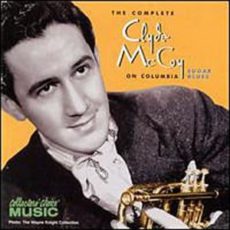
Clyde Lee McCoy was born on December 29, 1903 in Louisville, Kentucky into one of the families in the Hatfield-McCoy feud. He begun mastering the trumpet when he was without formal instruction, after the family moved to Portsmouth, Ohio in 1912. This would lead to performing regularly at church, school affairs and on the Cincinnati riverboats five years later, becoming one of the youngest musicians on the river at age 14.
In 1920 he auditioned with an untried band for a gig at the Whittle Hotel and Spa in Knoxville, Kentucky. Approved by the owner and the patrons the two week job lasted two months and the Clyde McCoy Orchestra was officially launched. In Chicago, Illinois he performed his song Sugar Blues at the Drake Hotel in 1930 and his solo rendition of the song would garner him national radio exposure for the band and a recording contract with Columbia Records, selling in excess of fourteen million copies internationally by the time of Clyde’s retirement in 1985.
The Clyde McCoy Orchestra would have a long and successful run at various hotels, sign a five-year recording contract with Decca Records, recorded frequently for Associated Transcriptions during the Depression and the sessions were used for delayed radio broadcasts. Following the ASCAP recording ban in 1941 that halted recording of all songs composed by its members, Clyde recorded for LangWorth Transcriptions in New York as well as Mercury, Capitol, and Vocalion Records.
Trumpeter Clyde McCoy, who developed the signature “wah-wah” sound in the late 1920s by fluttering a Harmon mute in the bell of his trumpet and has a star on the Hollywood Walk of Fame at 6426 Hollywood Boulevard, passed away from complications of Alzheimer disease on June 11, 1990 at the age of 86 in Memphis, Tennessee.
More Posts: trumpet
Daily Dose Of Jazz…
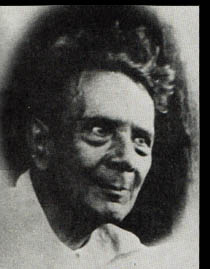
Emanuel Perez was born on December 28, 1871 in New Orleans, Louisiana into a Creole of Color family of Spanish, French and African descent. At the turn of the century, he became a member of the Onward Brass Band, leading it from 1903 to 1930. The Onward Brass Band was one of the most respected of its day that included King Oliver, Peter Bocage, Henry Kimball, Lorenzo Tio, Luis Tio, George Baquet, Isidore Barbarin, and Benny Williams. The Perez and Oliver two cornet, or “trumpet” team, was one of the most renowned in New Orleans.
Manuel started his own brass band, called the Imperial Orchestra, which operated from 1901 to 1908. A move north to Chicago, Illinois in 1915 saw him playing with Charles Elgar’s Creole Orchestra at the Arsonia Cafe and also with the Arthur Sims Band. Returning to the Crescent City in the Twenties, he played in Storyville, on steamboat excursions with Fate Marable and in parades with the Maple Leaf Orchestra.
Suffering a stroke in 1930, he left music during this period to work with his brother, who owned a moving company, while he ran the used furniture store. Cornetist Manuel Perez, who was a sight-reader and highly technical musician, He would go on to suffer a series of strokes that left him disabled and eventually caused his death in 1946 in New York City.
More Posts: cornet