

Daily Dose Of Jazz…
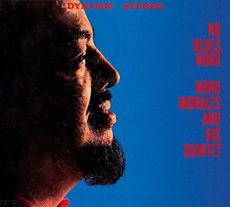
Norosbaldo Morales was born in Puerta de Tierra, Puerto Rico on January 4, 1912. The pianist learned several instruments as a child, playing in Venezuela from 1924 to 1930, then returned to Puerto Rico to play with Rafaél Muñoz.
Emigrating to New York City in 1935, Noro played there with Alberto Socarras and Augusto Cohen. By 1939, he and brothers Humberto and Esy put together the Brothers Morales Orchestra. He released the tune Serenata Ritmica on Decca Records in 1942, which catapulted him to fame in the mambo and rhumba music world; his band rivaled Machito’s in popularity in New York in the 1940s. It was during this time that his orchestra played for the Havana Madrid nightclub.
1960 saw Morales returned to Puerto Rico and play locally, working with Tito Rodríguez, José Luis Moneró, Chano Pozo, Willie Rosario and Tito Puente. Among the musicians who played in Morales’ orchestra were Ray Santos, Jorge López, Rafí Carrero, Juancito Torres, Pin Madera, Ralph Kemp, Pepito Morales, Carlos Medina, Lidio Fuentes, Simón Madera, Ana Carrero, Pellin Rodriguez, and Avilés.
The height of his fame and record production was his production of rumba records with his sextet, done after he gave up the big band idea. His use of the piano as both melody and rhythm was highly innovative at the time. Linda Mujer, Campanitas de Cristal, Perfume de Gardenias, Me Pica La Lengua and Silencio, all songs composed by others, were four of his big successes in this line.
Pianist and bandleader Noro Morales passed away on January 15, 1964 in San Juan, Puerto Rico at age 53.

More Posts: bandleader,history,instrumental,jazz,music,piano
Daily Dose Of Jazz…
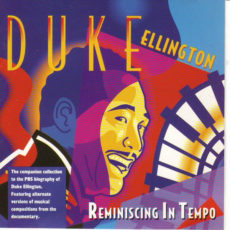
Harold “Geezil” Minerve was born in Havana, Cuba on January 3, 1922, and raised in Florida and began playing music at age 12. He played with drummer Jeff Gibson and vocalist Ida Cox early in his career, then worked as a freelance musician in New Orleans, Louisiana. Following stints with Clarence Love and Ernie Fields, Minerve served in the Army from 1943–46, then returned to play with Fields for a short time.
He worked with Buddy Johnson from 1949~1957, then with Mercer Ellington in 1960, Ray Charles from 1962 to 1964, and then worked as musical director for Arthur Prysock. In 1971 he joined the Duke Ellington Orchestra, filling Johnny Hodges’s spot after Hodges’s death. Minerve remained with the Ellington Orchestra until 1974, then returned to play with Mercer Ellington with the Duke Ellington Orchestra.
Following the success of the Broadway hit Sophisticated Lady when he played with the orchestra on stage and the touring company, Harold left for a brief time, playing with Ruth Brown’s Black and Blue Review in Paris, returning to Ellington in the Eighties. He did further freelance work later in the 1970s.
He would go on to work freelance in and around New York. Alto saxophonist, flutist, and clarinetist Harold Minerve passed away on June 4, 1992.

More Posts: clarinet,flute,history,instrumental,jazz,music,saxophone

Daily Dose Of Jazz…
Jackie Williams was born on January 2, 1933 in Harlem, New York City, New York. Taking on the role of the sideman, he has played and recorded with Doc Cheatham for 18 years at Greenwich Village’s Sweet Basil. He played and recorded with Buck Clayton on a U.S. State Department tour of the Middle East and Africa.
Jackie’s list of performances and recordings is a who’s who not limited to Benny Golson, Bobby Hackett, Illinois Jacquet, Duke Ellington, Alberta Hunter, Buddy Tate, Junior Mance Quintet, The Cliff Smalls Septet, The Dan Barrett Octet, The Howard Alden / Dan Barrett Quintet, Warren Vaché Quartet, Warren Vaché, Jr. And His All-Stars, Earl Hines, Milt Hinton, Alberta Hunter, Illinois Jacquet, Jay McShann, Bobby Short, Buddy Tate and Teddy Wilson, as well as many others.
Drummer Jackie Williams is a recipient of Yale University’s Duke Ellington Fellowship Medal. He is the drummer for the Junior Mance Trio and though he has not recorded as a leader but has continued a prolific career, in part, as a member of the Floating Jazz Festival Trio.
More Posts: drums,history,instrumental,jazz,music
Daily Dose Of Jazz…
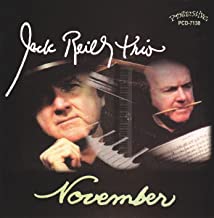
Jack Reilly, also known as Sean Petrahn was born on January 1, 1932, in Staten Island, New York. At age 7, he began classical piano and gave his first recital while still in grammar school. In high school, during his teen years, he formed a jazz band that proved to be pivotal in his choice of jazz as the major musical force in his life.
From 1951 to 1953 he played in a U.S. Navy band while stationed in Puerto Rico and it was there that he met Bill Evans. After military duty, Jack received a four-year scholarship to the Manhattan School of Music majoring in piano and composition. There he met Bill Russo, Phil Woods, Zoot Sims, John Lewis, John LaPorta, and Hall Overton. The year he graduated from MSMJohn LaPorta hired Jack to perform at the Newport Jazz Festival in 1958.
The critics gave high praise for the quartet’s performance and raves for Jack’s playing. During this time he also worked with Warren Covington, George Russell, Lennie Tristano, and Jerry Wald. He moved to California briefly in the mid-1960s to study Indian classical music with Ali Akbar Khan, and returned to Manhattan where he composed the large-scale piece Requiem Mass for Chorus and Jazz Quartet. This work was performed in New York with Sheila Jordan, Jack Six, Norman Marnell, Joe Cocuzzo, and the contemporary chorale with Carol Lian conducting.
In 1967, Jack presented an entire evening of his solo and trio works at Carnegie Recital Hall. His Liturgical Jazz ~ The Psalms, sung by Sheila Jordan was a true synthesis of the blues and classical music. A second choral work, commissioned by the National Endowment for the Arts, was titled The Light of The Soul. The jazz musicians included Jimmy Giuffre~flute and tenor sax, Jack Six~bass, and Joe Cocuzzo~drums.
Reilly served on the faculties of New York University, Berklee College of Music, The Mannes College of Music, and the New School for Social Research. He was chairman of the Department of Jazz Studies at the New England Conservatory of Music as well as the Jazz Program at La Musica A Villa Scarsella in Diano Marina, Italy. He presented lecture/recitals at numerous universities in Europe and in North America including a presentation at the prestigious International Piano Festival and Competition at the University of Maryland.
Pianist Jack Reilly released nine albums during his career and passed away on May 18, 2018, at the age of 86.

More Posts: bandleader,composer,history,instrumental,jazz,music,piano

Daily Dose Of Jazz…
Joe Harris was born on December 23, 1926 in Pittsburgh, Pennsylvania, growing up in the Manchester neighborhood. He learned to play the drums by taking lessons at an early age from Pittsburgh’s Bill Hammond, who taught his the rudiments of drumming. His musical education included symphonic percussion such as tympani and xylophone and by age 18 he was playing in big bands and touring the country.
As a young man in 1946 he moved to New York City, where he played with Dizzy Gillespie over the next two years, helped pioneer Latin jazz, and anchored the house band at the famed Apollo Theater. Balancing jazz with the heavier R&B sounds of tenor saxophonist Arnett Cobb in the late ’40s, Harris gigged with singer Billy Eckstine in 1950, and worked with Erroll Garner, Jimmy Heath, Ella Fitzgerald, Sarah Vaughan, Sonny Rollins, Stan Getz, Billie Holiday and James Moody.
Following a decade as one of the early bebop drummers, Joe took off for Sweden with his first tour in the summer of 1956 with trumpeter Rolf Ericson. His subsequent expatriate status put him in the company of other transplanted instrumentalists including trumpeter Benny Bailey, with whom he recorded from 1957 – 59, and pianist Freddie Redd. He taught himself to speak Swedish fluently and learned a fair amount of German and Japanese, eventually moved to Sweden, married and had a daughter before living in Germany and Japan for a time.
Harris eventually returned to the States for TV work in Los Angeles, California among other things. The drummer would later study music in the Far East, Egypt, Africa and Latin America prior to settling back in his native Manchester, scaling back his performance schedule with local musicians. He continued to practice daily, mentor students and teaching jazz history and drums for years at the University of Pittsburgh until his death on January 27, 2016 at age 89.
More Posts: drums