


Daily Dose Of Jazz…
Joe Harris was born on December 23, 1926 in Pittsburgh, Pennsylvania, growing up in the Manchester neighborhood. He learned to play the drums by taking lessons at an early age from Pittsburgh’s Bill Hammond, who taught his the rudiments of drumming. His musical education included symphonic percussion such as tympani and xylophone and by age 18 he was playing in big bands and touring the country.
As a young man in 1946 he moved to New York City, where he played with Dizzy Gillespie over the next two years, helped pioneer Latin jazz, and anchored the house band at the famed Apollo Theater. Balancing jazz with the heavier R&B sounds of tenor saxophonist Arnett Cobb in the late ’40s, Harris gigged with singer Billy Eckstine in 1950, and worked with Erroll Garner, Jimmy Heath, Ella Fitzgerald, Sarah Vaughan, Sonny Rollins, Stan Getz, Billie Holiday and James Moody.
Following a decade as one of the early bebop drummers, Joe took off for Sweden with his first tour in the summer of 1956 with trumpeter Rolf Ericson. His subsequent expatriate status put him in the company of other transplanted instrumentalists including trumpeter Benny Bailey, with whom he recorded from 1957 – 59, and pianist Freddie Redd. He taught himself to speak Swedish fluently and learned a fair amount of German and Japanese, eventually moved to Sweden, married and had a daughter before living in Germany and Japan for a time.
Harris eventually returned to the States for TV work in Los Angeles, California among other things. The drummer would later study music in the Far East, Egypt, Africa and Latin America prior to settling back in his native Manchester, scaling back his performance schedule with local musicians. He continued to practice daily, mentor students and teaching jazz history and drums for years at the University of Pittsburgh until his death on January 27, 2016 at age 89.

More Posts: drums
Hollywood On 52nd Street
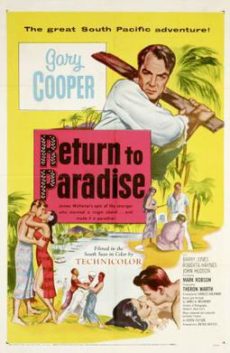
Return to Paradise is a jazz standard that was written by Dimitri Tiomkin and Ned Washington for the movie of the same name. The film was set and principal photography was shot in Samoa and released by United Artists in 1953. It starred Gary Cooper, Barry Jones and Roberta Haynes and the screenplay by Charles Kaufman was based on the 1951 short story Mr. Morgan by James Michener in his short story collection Return to Paradise, his sequel to Tales of the South Pacific.
The Story
During the 1920s, itinerant American beachcomber Mr. Morgan (Cooper) is deposited on the island of Matareva in the South Pacific. Deciding to stay, he is confronted by Pastor Cobbett (Jones), who lost both his father and his wife as a young missionary on the island and rules the island as a Puritanical despot, using local bullies as wardens to enforce his rules. Morgan wins the support of the natives after defeating the wardens with the aid of an empty shotgun.
Morgan has an illegitimate child with an island girl who dies in childbirth. Leaving his daughter with her grandmother he leaves the island, only to return during World War II. Cobbett has changed, his daughter Turia is now grown and in love with a stranded Navy pilot and Morgan now has to face the inevitable possibility of a repeat of his indiscretion with his daughter. Forcing the split by making the pilot and his crew leave the island, Turia is upset but reconciles with her father who decides to stay on with her on the island.

Requisites
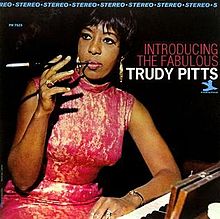
Introducing the Fabulous Trudy Pitts is the 1967 debut album that was recorded by the jazz organist and released on the Prestige label. The album is a compendium of mainstream standards and soul jazz covers.
Bill Carney composed thee songs except those indicated: Steppin’ in Minor, The Spanish Flea (Julius Wechter), Music to Watch Girls By (Sid Ramin), Something Wonderful (Oscar Hammerstein II, Richard Rodgers), Take Five (Paul Desmond), It Was a Very Good Year (Ervin Drake), Siete, Night Song (Lee Adams, Charles Strouse), Fiddlin’ and Matchmaker, Matchmaker (Jerry Bock, Sheldon Harnick).
The personnel included Trudy Pitts on organ and vocals, guitarist Pat Martino, drummer Bill Carney and Carmell Johnson on congas.

More Posts: choice,classic,collectible,collector,history,instrumental,jazz,music,organ
Daily Dose Of Jazz…
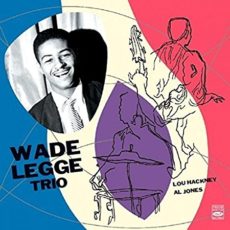
Wade Legge was born on February 4, 1934 in Huntington, West Virginia. He played more bass than piano in his early years, and it was with the bass that Milt Jackson first noticed him, recommending Wade to Dizzy Gillespie. After hiring him, Gillespie moved him to piano and he remained a member of Gillespie’s ensemble until 1954. During his Dizzy years, Legge recorded a date in France as a trio session leader.
Following his tenure with Gillespie, Wade moved to New York City and freelanced there, playing in Johnny Richards’s orchestra, and sessions with Charles Mingus, Sonny Rollins, Milt Jackson, Joe Roland, Bill Hardman, Pepper Adams, Jimmy Knepper and Jimmy Cleveland.
Legge was one of three pianists recording as a member of the variously staffed Gryce/Byrd Jazz Lab Quintets in 1957 and appeared on more than 50 recordings before retiring to Buffalo in 1959. Jazz bassist and pianist Wade Legge died on August 15, 1963 in Buffalo, New York at the age of 29.

Requisites
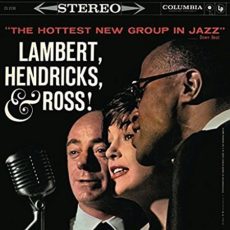
Lambert, Hendricks & Ross were a vocalese trio formed by jazz vocalists Dave Lambert, Jon Hendricks and Annie Ross. This was their fourth album of the six they would record before Annie Ross left the group.
The Hottest New Group In Jazz is a 1960 album for the CBS record label and consists of ten compositions recorded: Charleston Alley, Moanin’, Twisted, Bijou, Cloudburst, Centerpiece, Give Me That Wine, Sermonette, Summertime and Everybody’s Boppin’.
The cover photo was taken by Vernon Smith.
More Posts: collectible,vocal