

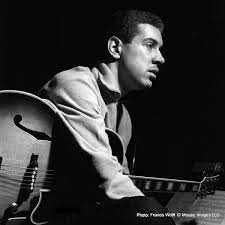
Three Wishes
The question was posed to Kenny Burrell related to three wishesand he told the Baroness Pannonica:
- “No race prejudice.”
- “Much less emphasis on materialistic values.”
- “Ample opportunity for and encouragement of individual expression of humanistic values.”
*Excerpt from Three Wishes: An Intimate Look at Jazz Greats ~ Compiled and Photographed by Pannonica de Koenigswarter

More Posts: baroness,guitar,history,instrumental,jazz,music,pannonica,three,wishes

Daily Dose Of Jazz…
Alan Lawrence Turnbull was born November 23, 1943 in Melbourne, Australia and after taking drum lessons from Graham Morgan he commenced his professional career at the age of 14. He played with top local jazz musicians such as Graeme Lyall, Keith Hounslow and Brian Brown while filling in for drummer Stewart Speer at Horst Liepolt’s Melbourne jazz venue, Jazz Centre 44.
Moving to Sydney in the late 1960s, Turnbull soon became very active in the jazz scene and worked regularly as a freelance musician, including a number of years with the Don Burrows quartet which worked regularly at various clubs, concerts, festivals and other venues throughout Australia and in the United States.
His partnership of drums/double bass with American double bassist Ed Gaston set a new standard for swing jazz rhythm sections in Australia that would influence Australian rhythm sections for decades.
In the following years he worked with the likes of Milt Jackson, Joe Henderson, Gary Burton, Sonny Stitt, Barney Kessell, Richie Cole, Cleo Laine, Billy Eckstine, Cab Calloway, Billy Field, and Neil Sedaka as well the Sydney Symphony Orchestra and the Australian Pops Orchestra.
Appearing on numerous recordings, including those of Don Burrows, Rolf Stube’s Jazz Police, Graeme Norris Band, The Jazz Co-op, The Two with Paul Macnamara, Neil Sedaka and Billy Field, drummer Alan Turnbull, who was also a freelance professional musician, passed away on August 28,2014.

More Posts: drums,history,instrumental,jazz,music
Daily Dose Of Jazz…
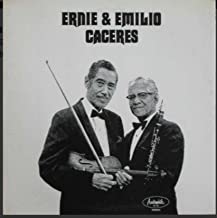
Ernesto Caceres was born on November 22, 1911 in Rockport, Texas and learned to play the clarinet, guitar, alto and baritone saxophone. He first played professionally in 1928 in local Texas ensembles. He and his brother Emilio moved to Detroit, Michigan before moving to New York City, taking work as session musicians. In 1937 they made live nationwide appearances on Benny Goodman’s popular radio series Camel Caravan which created a sensation and made them jazz stars.
In 1938 Ernesto became a member of Bobby Hackett’s band, then worked as a sideman with Jack Teagarden and Glenn Miller’s orchestra from 1940 to 1942. While with Miller, he made an appearance in the films Sun Valley Serenade and Orchestra Wives. Time with Benny Goodman, Woody Herman, and Tommy Dorsey followed later in the 1940s. In 1949 he put together his own quartet, playing at the Hickory Log in New York. He was a frequent performer with the Garry Moore Orchestra on television.
At the beginning of the 1960s he played with the Billy Butterfield Band. In 1964 he moved back to Texas and played in a band with brother Emilio from 1968 until his death. He spent some time in 1965 and 1966 at Mint Hotel in Las Vegas, Nevada and at the Holiday Hotel in Reno, Nevada with the Johnny Long Band. Saxophonist, clarinetist and guitarist Ernesto Caceres passed away from cancer on January 10, 1971.
More Posts: bandleader,clarinet,guitar,history,instrumental,jazz,music,saxophone
Requisites
John Jenkins, Cliff Jordan, Bobby Timmons | By Eddie Carter
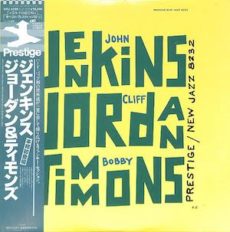
I begin this morning’s discussion with the 1960 collaborative album, Jenkins, Jordan, and Timmons (New Jazz NJLP 8232) by John Jenkins, Clifford Jordan, and Bobby Timmons. Joining them on this date are Wilbur Ware on bass and Dannie Richmond on drums. My copy used in this report is the 1981 Japanese Mono reissue by Victor Musical Industries (New Jazz SMJ-6299). John Jenkins’ approach to Hard-Bop and standards on the alto sax was distinctively tasteful. His solos always showed respect and affection for the tunes he played, and he could bring imaginatively unique lines even to well-worn standards. His other album as a leader is the self-titled release, John Jenkins (1957). Clifford Jordan’s interpretations on the tenor sax were the perfect characterization of his sound, sometimes growling, sometimes purring, but always with a formidable technique and a passionately assertive tone. Here, Jordan is in great form with another horn to joust with.
Pianist Bobby Timmons was one of the most talented yet neglected figures in the annals of Jazz. He composed two songs that are etched in the minds of many Jazz fans, Dat Dere, a mainstay in the early days of The Cannonball Adderley Quintet and Moanin’ that became a huge hit for The Jazz Messengers. Timmons appeared on the landmark album, Art Blakey and The Jazz Messengers (1958). On this date, he approaches each tune with a melodic and rhapsodic touch that’s irresistible. Wilbur Ware was an extraordinary soloist on the bowed bass; he possessed a beautiful sound that could be fat, resonant, and fluid without any loss of body on any of the songs he played. Dannie Richmond is best known for his many albums with Charles Mingus, he’s a very pleasant surprise on this record with an energetic liveliness in his playing. He also recorded with many jazz greats including George Adams, Pepper Adams, Chet Baker, Ted Curson, Booker Ervin, Duke Jordan, Herbie Nichols, Horace Parlan, and Don Pullen.
Clifford Jordan’s Cliff’s Edge starts Side One at midtempo with both saxes flexing their muscles in unison on the opening chorus. Cliff is up first with a very satisfying opening solo at an easy, unhurried pace. John continues the conversation with a pleasant zest on the second performance. Bobby tells his story last with a charming interpretation that comes across effectively anchored by Wilbur and Dannie’s support into the quintet’s ending. Up next is the 1946 jazz standard Tenderly by Walter Gross and Jack Lawrence. Timmons opens the song with a soothing introduction, then Jordan steps up first for a deeply compassionate melody and an opening statement exhibiting sensitive delicacy. Timmons comes in next, gently caressing each note of an exceptionally tasteful interpretation. Ware deftly captures the song’s subtle mood on a gorgeously warm solo, followed by Jenkins who concludes the readings and the song with a beautifully tender interpretation.
The first of two tunes from Jenkins’ pen, Princess begins with a collective mid-tempo groove. John starts the opening solo with an articulate tone dispensing absolute joy. Cliff takes the listener for a comfortable joyride on the next statement. Bobby is consistently inventive on the closing performance preceding the quintet’s exit. Side Two starts with Soft Talk by Julian Priester, an energized swinger from the start of the ensemble’s electrically charged theme. Jenkins speaks first to start this scintillating conversation with an aggressive fierceness. Jordan continues the dialogue, making every note count with high voltage power. Jenkins and Jordan soar to great heights in an invigorating exchange over the next few verses. Timmons adds his voice to the discussion next on a heated reading, then Ware walks briskly on an abbreviated statement. Richmond has the last word with energetic drumming in an exciting conversation between both saxes into the reprise and abrupt climax.
Jenkins’ Blue Jay is a laid-back midtempo blues that begins with an unaccompanied lively introduction by Ware, segueing into the quintet’s collective theme. John starts the soloing with an easy-going opening statement. Clifford responds with a marvelous interpretation. Bobby cruises into the third reading with a strong beat and Wilbur steps last into the spotlight for a concise comment that flows effortlessly to the ensemble’s closing chorus and finale. The remastering of Rudy Van Gelder’s original recording has been superbly recreated by Victor Musical Industries with all five instruments full of body, presence, and a vibrant soundstage. If you enjoy good Hard-Bop and are a fan of John Jenkins, Cliff Jordan, and Bobby Timmons, I offer for your consideration, Jenkins, Jordan, and Timmons. An excellent album that in my opinion, no library should be without!
~ Art Blakey and The Jazz Messengers (Blue Note BLP 4003/BST 84003), John Jenkins (Blue Note BLP 1573), Them Dirty Blues (Riverside RLP 12-322/RLP 1170) – Source: Discogs.com ~ Tenderly – Source: JazzStandards.com © 2021 by Edward Thomas Carter
More Posts: choice,classic,collectible,collector,history,instrumental,jazz,music,piano,saxophone
Daily Dose Of Jazz…
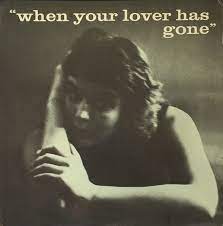
Claire Austin was born Augusta Marie on November 21, 1918 to Swedish-American parents in Yakima, Washington. She played in nightclubs throughout the northwest in the 1930s and toured with the Chuck Austin Band in the 1940s.
Retiring from professional singing by the early 1950s, Claire began working as an accountant in Sacramento, California. After singing with Turk Murphy, she frequently performed in San Francisco, California for two years. She remained active through the 1970s.
Vocalist and pianist Claire Austin, whose singing style has been compared to Peggy Lee, passed away on June 19, 1994.
More Posts: bandleader,history,instrumental,jazz,music,piano,vocal