

Requisites
For Those In Love ~ Dinah Washington | By Eddie Carter
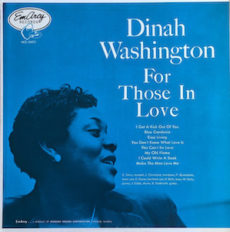
To the singer of jazz ballads, standards, or contemporary hits, a song is comprised of three essential parts, melody, harmony, and rhythm. When all three elements are mixed, and enhanced by great arrangements and musicians, the result is an enriching music experience. This morning’s choice from the library is by Dinah Washington, a vocalist who sang the blues, jazz, pop, and R&B proficiently. The album is For Those In Love (EmArcy MG 36011), recorded and released in 1955. She’s joined on this date by Clark Terry on trumpet, Jimmy Cleveland on trombone, Paul Quinichette on tenor sax, Cecil Payne on baritone sax, Wynton Kelly on piano, Barry Galbraith on guitar, Keter Betts on bass, and Jimmy Cobb on drums. The arrangements are by Quincy Jones and my copy used in this report is the second 1955 US Mono release featuring the silver Mercury Records oval at the noon position of the label with EmArcy Jazz appearing in the bottom of the oval.
The opener is I Get a Kick Out of You, written by Cole Porter for the 1934 Broadway musical, Anything Goes, and the octet gets right to work on this swinger. Dinah has the spotlight first and gives a splendidly entertaining improvisation. Jimmy follows, having a ball on a spirited statement, then Kelly displays impeccable chops on a relaxed reading. Clark comes in for some savory swinging with a mute on the closing solo, and Dinah handles the finale with great effectiveness leading the group into a slow fade. Blue Gardenia by Lester Lee and Bob Russell was composed for the 1953 crime drama, The Blue Gardenia. It became a signature song for Dinah and the octet offers a supporting role behind her delicately subtle narrative. Quinichette gives a brief statement of tenderness, then Galbraith offers a solo of soft tranquility. Payne has a moment in the spotlight adding a dreamlike softness to the closing solo. Dinah wraps up the song with emotional sensitivity on the climax.
Easy Living by Ralph Rainger and Leo Robin was the main theme of the 1937 comedy of the same name. The group provides a perfect complement to Dinah’s luxurious vocals on the opening chorus, and the solo order is Paul, Clark, and Jimmy. The first two readings are like delicate porcelain figurines, perfectly proportioned and translucent. The pace picks up slightly for the trombonist who plays the next interpretation with sensual beauty. Ms. Washington is especially attractive on the reprise with a velvety, smooth timbre in her voice that’s gorgeous. You Don’t Know What Love Is by Gene de Paul and Don Raye is a perfect song for film-noir. The haunting lyrics describe the hurt and sadness at the end of a love affair. It opens with a solemn introduction by Dinah and Galbraith. She captures the subtle pathos of the song with the octet’s soft supplement. Cleveland provides the song’s only solo with a graceful and elegant interpretation before Dinah returns to the melancholy mood of the beginning.
This Can’t Be Love by Richard Rodgers and Lorenz Hart was written in 1938 and featured in the Broadway musical, The Boys From Syracuse. The mood is jubilant, and Dinah rises to the occasion with a vivacious vocal treatment. Clark’s muted trumpet sets a lively mood on the first solo. Cecil is up next with an energetic performance of his own. Jimmy mines a vein of unsuspected riches on the third statement, then Paul delivers a delightful interpretation. Kelly cooks up a mesmerizing musical brew before Dinah sings the closing chorus. My Old Flame by Arthur Johnston and Sam Coslow made its debut in the 1934 film, Belle of The Nineties. Dinah begins this tune as a duet with Galbraith preceding the rhythm section’s slow-tempo theme. She’s the dominant presence here and presides with authority, as she recounts her lost love some time ago in a reflective flashback. The horns make their presence known for the closing chorus with Dinah giving it the recognition it deserves.
The 1940 show tune by Rodgers and Hart, I Could Write A Book gets taken for a mid~tempo spin by Ms. Washington and the ensemble. The octet starts the song in unison for the introduction, then Dinah treats the listener to an effervescent vocal performance on the melody. Paul starts with a passionately playful lead solo. Terry adds some fire on the muted trumpet, then Cleveland ends the solos on an upbeat note. The album’s finale, Make The Man Love Me is by Arthur Schwartz and Dorothy Fields. Quinichette opens with a seductive introduction, then Dinah makes a passionate romantic plea with the lyrics. Paul takes the lead with a remarkably graceful solo, then Terry turns in a beguilingly beautiful statement. Kelly approaches the next performance with affective empathy and Cleveland soothes the soul on the closer. Dinah sings two verses of the Duke Ellington–Paul Francis Webster classic, I Got It Bad (and That Ain’t Good) before returning to the original lyrics for the coda.
It’s a solid summation to an album sparkling with marvelous music, exciting, evocative solos, excellent arrangements, and the extraordinary vocals by Dinah Washington that are exceptionally presented. She brought the lyrics she sang to life in each song. The Queen of The Blues, a title she gave herself, recorded a total of thirty-three LP’s for EmArcy, Mercury, and Roulette during her short recording career that began in 1952 and lasted only eleven years. Though her greatest hit, What a Difference a Day Makes came four years later in 1959, For Those In Love would become one of the strongest albums of her career. Dinah passed away from a drug overdose on February 14, 1963, at the age of thirty-nine. This is a gorgeous recording with a splendid soundstage that’ll take your breath away each time you listen. I found For Those In Love to be thoroughly enjoyable and recommend it as a wonderful starting point for any fan interested in exploring the music of Dinah Washington. After one audition, I’m sure you will too! ~ What a Difference a Day Makes (Mercury MG 20479/SR-60158) – Source: Discogs.com
~ I Get a Kick Out of You, Easy Living, My Old Flame, I Could Write a Book, I Got It Bad (and That Ain’t Good) – Source: JazzStandards.com ~ Blue Gardenia, Dinah Washington, Make The Man Love Me – Source: Wikipedia.org © 2021 by Edward Thomas

More Posts: choice,classic,collectible,collector,history,instrumental,jazz,music,vocal
Daily Dose Of Jazz…
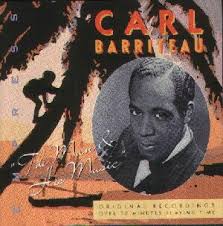
Carl Alrich Stanley Barriteau was born on February 7, 1914 in Trinidad, but was raised in Maracaibo, Venezuela. He played tenor horn in Trinidad from 1926 to 1932, before playing the clarinet in a local police band from 1933 to 1936. At the same time, he also played in Port of Spain with the Jazz Hounds and the Williams Brothers Blue Rhythm Orchestra.
Moving to London, England where he played in Ken Johnson’s West Indian Swing Band. Melody Maker named him “best clarinetist” for seven consecutive years. In the 1940s Carl led his own group on recordings for Decca Records.
He did several USO tours for American troops from 1958 to 1966. He emigrated to Australia in 1970. Clarinetist Carl Barriteau passed away on August 24, 1998, in Sydney, Australia.

More Posts: clarinet,history,instrumental,jazz,music
Daily Dose Of Jazz…
Nelson Boyd was born on February 6, 1928 in Camden, New Jersey. He played in local orchestras in Philadelphia, Pennsylvania around 1945, and then moved to New York City in 1947.
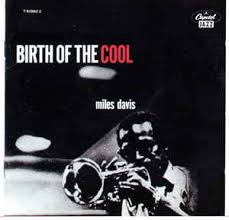
While living there Boyd first performed with Coleman Hawkins, Tadd Dameron, and Dexter Gordon. He would go on to play with Sarah Vaughan, Dizzy Gillespie, and Charlie Barnet in 1948. In 1947, he recorded with Fats Navarro and Charlie Parker. He later played with Jay Jay Johnson and recorded with Miles Davis on Davis’s Birth of the Cool sessions in 1949. In addition, Davis’s song “Half Nelson” was named after Boyd because of his stature.
After 1949, Nelson often played with Gillespie and toured the Middle East with him in 1956. Later, he recorded with Melba Liston in 1958 with her trombone ultimates on Melba Liston and Her ‘Bones. He also did sessions with Max Roach and Thelonious Monk.
He recorded four albums with Gillespie, and one each with Milt Jackson, Charles McPherson, Max Roach, and Sonny Stitt, Bud Powell, and J. J. Johnson. Bebop bassist Nelson Boyd, whose last recordings were in 1964, passed away in October 1985.
More Posts: bass,history,instrumental,jazz,music
Daily Dose Of Jazz…
Harold Andrew Dejan was born on February 4, 1909 into a Creole family in New Orleans, Louisiana and took clarinet lessons as a child before switching to the saxophone. He became a professional musician in his teens, joining the Olympia Serenaders and then the Holy Ghost Brass Band.
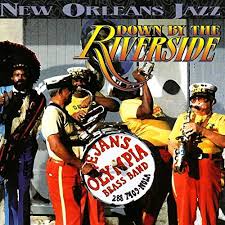
He played regularly in Storyville, at Mahogany Hall, and on Mississippi riverboats. He also worked in the mail office of the Lykes Brothers Steamship Company for 23 years. In World War II, he played in Navy bands, then returning to his day job and his parallel musical career after the war, he led his own band, Dejan’s Olympia Brass Band, from 1951, was considered one of the top bands in New Orleans.
The band often appeared at Preservation Hall, recorded nine albums, and also toured internationally, making 30 concert tours of Europe and one of Africa. It was featured in the James Bond movie Live and Let Die, and as well as in many TV commercials.
Suffering a stroke in 1991 left him unable to play the saxophone, but he continued as a band leader and singer until shortly before his death. Alto saxophonist and bandleader Harold Dejan, known affectionately as Duke, passed away on July 5, 2002 in New Orleans.
More Posts: bandleader,history,instrumental,jazz,music,saxophone
Daily Dose Of Jazz…
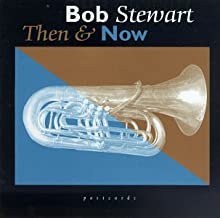
Bob Stewart was born in Sioux Falls, South Dakota on February 3, 1945. He received his Bachelor of Music Education degree from the Philadelphia College of the Performing Arts and his master’s degree in education from Lehman College Graduate School.
Stewart taught music in Pennsylvania public schools and at the Fiorello H. LaGuardia High School of Music & Art and Performing Arts in New York City. He is now a professor at the Juilliard School and is a distinguished lecturer at Lehman College.
Stewart has toured and recorded with such artists as Charles Mingus, Gil Evans, Carla Bley, Muhal Richard Abrams, David Murray, Taj Mahal, Dizzy Gillespie, McCoy Tyner, Freddie Hubbard, Don Cherry, Nicholas Payton, Wynton Marsalis, Charlie Haden, Lester Bowie, Bill Frisell and many others in the United States, Europe, and Eastern Asia.
He was a frequent collaborator with saxophonist Arthur Blythe from the 1970s into the early 2000s, often taking the place of the string bass that traditionally supports a jazz ensemble. In their review of Blythe’s album Lenox Avenue Breakdown, the editors of The Penguin Guide to Jazz called Stewart’s title track solo “one of the few genuinely important tuba statements in jazz. Tubist Bob Stewart continues to be a part of the jazz scene.
More Posts: bandleader,history,instrumental,jazz,music,tuba