

The Jazz Voyager
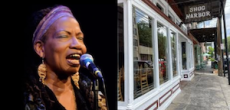
Back in the States this Jazz Voyager has landed at Louis Armstrong New Orleans International Airport. Getting in early gives me time to visit friends in Slidell and get beignets in the French Quarter. Then I’ll be on my way to the 7th Ward’s three-block entertainment district of Frenchmen Street in the Faubourg Marigny. The final destination is the intimate 86 seat jazz venue called Snug Harbor.
This Thursday I will have the pleasure of experiencing longtime New Orleans jazz vocalist, visual artist and educator Betty Shirley who has come full circle in her life and is now reaping the benefits of her hard-earned endeavors. The Big Easy Award winner has released several acclaimed albums including Unveiled, Close Your Eyes, and With The Red Organ Trio, solidifying her legacy as a vital force in the city’s jazz scene.
The Band:
Betty Shirley – vocals
Will Thompson – piano
Quinn Sternberg – bass
Simon Lott – drums
Snug Harbor is located at 626 Frenchmen Street, New Orleans, Louisiana 70116. For more information contact the venue at https://snugjazz.com.
Showtimes ~ 7:30pm & 9:30pm
Cover: $41.30

More Posts: adventure,club,genius,jazz,museum,music,preserving,travel,vocal

Daily Dose Of Jazz…
Leon Calvert was born on June 26, 1927 in Westcliffe-on-Sea, England and learned to play the trumpet in his childhood. His family moved to Manchester, England while he was very young. His first professional job was with Jack Nieman’s Band at the Plaza in Manchester and by 1945 he was on the London circuit. From late 1947 he performed on the ocean liner Mauretania with Paul Lombard.
Joining Oscar Rabin’s band in 1948, that year he was one of the ten musician co-founders of Club Eleven in Great Windmill Street, and later Carnaby Street. While at the club he played with the house band led by John Dankworth. During the late Forties and into the Fifties Calvert worked with the Ambrose band (1949), the Steve Race Bop Band (1949), Tito Burns (1950–1951) and then for four years with Carroll Gibbons. In the mid-1950s he had stints with Ken Moule, Buddy Featherstonhaugh, the London Jazz Orchestra and Denny Boyce. In the late 1950s he worked with Tony Crombie and Vic Lewis.
The 1960s saw Calvert operating a jazz label at Lansdowne Studios with drummer Barry Morgan, Monty Babson and Jerry Allen. In 1967 the group founded Morgan Sound Studio which ventured outside the jazz idiom and became the location for rock recordings by Joan Armatrading, Black Sabbath, The Cure, Donovan, Jethro Tull, The Kinks, Paul McCartney, Cat Stevens, Rod Stewart, and numerous more.
In 1961 he took over from Dick Hawdon as lead trumpeter for the John Dankworth Orchestra. He can be heard on many Ken Moule and Dankworth recordings of this period, his style influenced by the early work of Miles Davis. He was featured on Johnny Scott’s London Swings in 1966.
The 1970s saw Calvert recording with Richard Rodney Bennett on his Jazz Calendar Suite and on Tony Kinsey’s Thames Suite. He worked mostly as a freelance musician for radio, television and film. As a session trumpeter he recorded with John Baryy, and The Beatles. In the 1980s, Calvert sometimes played as a duo with pianist Jack Honeybourne, and he continued playing at small jazz venues into the 1990s, with the Sounds of Seventeen, Jazz Spell and George Thorby’s Band.
Bebop jazz trumpeter Leon Calvert, who was one of the co-founders of Club Eleven, died on May 1, 2018 in Hatfield, Hertfordshire, England at the age of 90.

More Posts: bandleader,history,instrumental,jazz,music,trumpet
Daily Dose Of Jazz…
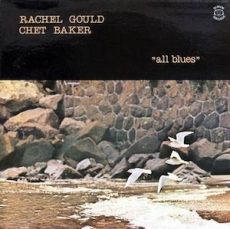
Rachel Gould was born Rachel Field on June 25, 1953 in Camden, New Jersey. She studied cello and classical singing at Boston University. Upon moving to Germany in 1975 she established herself as a jazz musician, formed her own quartet and toured Europe. In 1979 she appeared in London, England with Chet Baker and recorded the much acclaimed album All Blues.
In the early 1980s, she performed at numerous European festivals, and worked with groups led by Ack van Rooyen, Lou Blackburn, Ferdinand Povel, Bobby Burgess, Michel Herr, Tom Nicholas, Dieter Reith and Erwin Lehn. In 1983 Gould sang for quite a while in the United States and, in New York City, with Woody Herman, Sal Nistico and Jake Hanna.
Upon her return to Germany, she presented the band Breath & Bones at the Leverkusen Jazz Festival. She continued her work in Germany from 1984 onwards, consisting mainly of teaching as a lecturer at the conservatories in Maastricht, Cologne, Mainz and Hamburg. Then in 1987 she travelled to the Swiss Jazz School.
She went on to work with Joe Haider and Benny Bailey. Gould played with Riccardo Del Fra on the 1989 album A Sip of Your Touch, and with his band on a live album at the 1991 Montreux Jazz Festival.
Since 1991, vocalist Rachel Gould has continued to perform in addition to working as a lecturer in jazz singing at the Royal Conservatory of The Hague.
More Posts: bandleader,composer,history,instrumental,jazz,music,vocal
On The Bookshelf
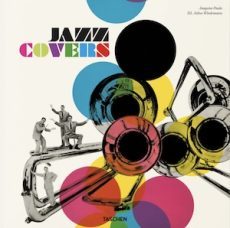
JAZZ COVERS | JOAQUIN PAULO
This striking collection of jazz record covers shows the designs that defined a sound. Containing covers from the 1940s to the early 1990s, each reproduction is accompanied with essential background information. Spanning photographic and illustrative works, these album artworks match music and design in a remarkable history of jazz.
Part design history, part trip down musical memory lane, this anthology of jazz album artwork is above all a treasure trove of creative and cultural inspiration. Spanning half a century, it assembles the most daring and dynamic jazz cover designs that helped make and shape not only a musical genre but also a particular way of experiencing life.
From the 1940s through to the decline of LP production in the early 1990s, each chosen cover design is distinct in the way it complements the energy of the album’s music with its own visual rhythms of frame, line, text, and form. To satisfy even the most demanding of music geeks, each record cover is accompanied by a fact sheet listing performer and album name, art director, photographer, illustrator, year, label, and more.
The AuthorJoaquim Paulo is a consultant for major labels and directs a number of radio stations in Portugal. He started collecting vinyl at the age of 15, and flew to London, Paris, New York, and São Paulo to enrich his collection of over 25,000 LPs. He lives and works in Lisbon and dedicates his free time to recovering old and rare recordings.
The Editor
Julius Wiedemann studied graphic design and marketing and was an art editor for newspapers and design magazines in Tokyo before joining TASCHEN in 2001. His titles include the Illustration Now! and Record Covers series, as well as the infographics collection and books about advertising and visual culture.
Jazz Covers
Taschen: Hardcover, 11.5 x 11.5 in., 9.21 lb, 552 pages
ISBN 978-3-8365-8525-5
Edition: Multilingual (English, French, German)

Daily Dose Of Jazz…
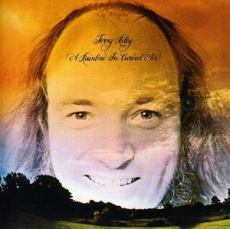
Terrence Mitchell Riley was born in Colfax, California on June 24, 1935 and grew up in Redding, California. In the 1950s, he began performing as a solo pianist and studied composition at San Francisco State University, the San Francisco Conservatory, and the University of California Berkeley, studying with Seymour Shifrin and Robert Erickson.
Befriending minimalist omposer La Monte Young, together they performed Riley’s improvisatory composition Concert for Two Pianists and Tape Recorders in 1959–60. Riley later became involved in the experimental San Francisco Tape Music Center, working with Morton Subotnick, Steve Reich, Pauline Oliveros, and Ramon Sender. Throughout the 1960s, he also traveled frequently in Europe, taking in musical influences and supporting himself by playing in piano bars. He also performed briefly with the Theatre of Eternal Music in New York in 1965-1966.
His most influential teacher was Pandit Pran Nath, a master of Indian classical voice who also taught La Monte Young, Marian Zazeela, and Michael Harrison. Riley made numerous trips to India over the course of their association to study and accompany him on tabla, tambura, and voice. In 1971 he joined the Mills College faculty to teach Indian classical music. Riley also cites John Cage and “the really great chamber music groups of John Coltrane and Miles Davis, Charles Mingus, Bill Evans, and Gil Evans as influences on his work.
His long-lasting association with the Kronos Quartet began around 1980 and throughout his career Terry composed 13 string quartets for the ensemble. in addition
Organist, pianist, saxophonist and tamburist Terry Riley, who teaches both as an Indian raga vocalist and as a solo pianist, continues to perform live.
More Posts: bandleader,history,instrumental,jazz,keyboard,music,organ,piano,saxophone,tambura