

Daily Dose Of Jazz…
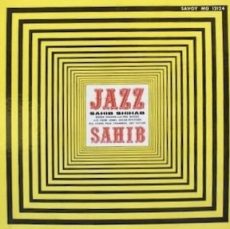
Sahib Shihab was born Edmund Gregory on June 23, 1925 in Savannah, Georgia. Schooled in New York from age 3, he first played alto saxophone professionally for Luther Henderson at 13. He studied at the Boston Conservatory, and played in and around New York with Art Blakey, Gigi Gryce, Benny Golson, Thelonious Monk, Oscar Pettiford, Dizzy Gillespie. He toured with the bands of Fletcher Henderson, Buddy Johnson, Roy Eldridge, Andy Kirk, Duke Ellington, Count Basie and the original 17 Messengers of Blakey.
During the late 1940s, Shihab played with Thelonious Monk, and on July 23, 1951 he recorded with Monk that was later issued on the album Genius of Modern Music: Volume 2. During the decade he recorded with Art Blakey, Kenny Dorham and Benny Golson. The invitation to play with Dizzy Gillespie’s big band saw his switch to baritone saxophone.
Between 1952 to 1955 he toured with Illinois Jacquet in Europe, as well as with Coleman Hawkins and Sarah Vaughn and toured with Dakota Stanton from 1956 to 1958. He was one of the musicians who showed up for the Art Kane photograph A Great Day In Harlem. Closing out the Fifteies he toured Europe with Quincy Jones, and subsequently settled in Scandinavia in 1960, married and raising a family. Shihab, disillusioned with racial politics in the United States, decided around this time to move to Europe.
As an educator he worked for Copenhagen Polytechnic and wrote scores for television, cinema and theatre. He composed and arranged for Swedish and Danish radio orchestras. He went on to perform with bassist Niels-Henning Ørsted Pedersen and together with pianist Kenny Drew, he ran a publishing firm and record company. Through the Sixties he joined the Kenny Clarke/Francy Boland Big Band and remained a member of the band during its 12 years existence.
Returning to the United States in 1973 he toured with Quincy Jones and The Brothers Johnson. He returned to Copenhagen, Denmark three years later, where he produced albums for Metronome Records, along with Kenny Drew. The album is titled Brief Encounter, and features the voices of Debby Cameron and Richard Boone. At decade’s end he started a record company with Kenny Drew called Matrix and spent his remaining years between New York and Copenhagen, performed in partnership with Art Farmer and led his own jazz combo called Dues.
Hard bop baritone, alto, and soprano saxophonist and flautist, composer, arranger, producer and educator Sahib Shihab, who beginning of 1986 was a visiting artist at Rutgers University, died from cancer on October 24, 1989, in Nashville, Tennessee at age 64.

More Posts: arranger,bandleader,composer,educator,flute,history,instrumental,jazz,music,producer,saxophone
Requisites
Three Quartets ~ Chick Corea | By Eddie Carter
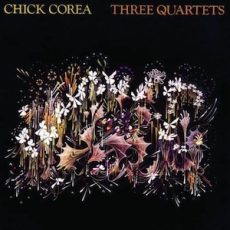
Chick Corea embarks on a captivating exploration of jazz through the lens of Baroque, Classical, Impressionist, and Romantic traditions in Three Quartets (Warner Bros. BSK 3552). He began learning the piano at the age of four and later took up the drums by the age of eight. Corea also became proficient with other keyboards and the vibraphone. His professional career began when he performed with Mongo Santamaria in 1962. Over the years, he contributed to several landmark jazz albums and collaborated with numerous artists. He also formed several groundbreaking groups, including Circle, the Chick Corea Akoustic and Elektric Bands, Five Peace Band, Origin, The New Trio, and Return to Forever. These ensembles cemented his reputation as one of jazz’s most innovative, revered, and versatile musicians.
The pianist is joined by an ensemble of highly skilled musicians: Michael Brecker on tenor sax, Eddie Gómez on double bass, and Steve Gadd on drums. Corea not only composed but also arranged all the songs, and my copy of the album is the 1981 U.S. Stereo release. Side One gets underway with the trio’s effervescent introduction to Quartet No. 1, setting the stage for an adventurous melody powered by the foursome’s rock-inspired rhythm. Michael’s entrance amplifies the energy aggressively in the opening statement. Eddie has the spotlight next and takes an invigorating stroll, then Chick’s closing interpretation comes vibrantly alive, leaving the listener’s ears sizzling, ahead of the song’s closing moments.
Quartet No. 3 takes matters a step further in terms of character and expression. The ensemble’s introduction is slow and deliberate, gradually building momentum as the melody unfolds. Brecker opens with a bold statement that explores the edges of avant-garde jazz and post-bop. Gómez comes in for a brief interlude, then Corea delivers one of his most inventive solos. Gómez shines once more in an excellent reading before Brecker guides the quartet into the out-chorus. Quartet No. 2 (Part 1) is a ballad that’s dedicated to Duke Ellington, beginning with a lengthy piano introduction, which develops into Michael’s tender theme. Eddie starts things off with a graceful solo, then Chick makes a polite point next. Michael wraps things up with a sweet-toned delivery in the lead-up to the tranquil climax.
The closer, Quartet No. 2 (Part II), dedicated to John Coltrane, welcomes us to Gadd’s crisp introduction, which segues into the group’s upbeat theme. Corea launches into the opening statement with swift and electrifying lines. Gómez steps in next with a nimble reading. Brecker follows with a fiery performance, before Gadd steps in for a brief workout. Corea returns for a short solo, leading to a thrilling finish. Chick also wore the producer’s hat on this date, and Bernie Kirsh was behind the recording dials, as well as handling the mixing. The album possesses a superb soundstage, with no harshness in the highs, midrange, or low end, allowing the quartet to come through your speakers with a clarity that will make you feel like they are in your listening room.
Expressing what “Three Quartets” means to me is no easy task. I first encountered the album at the Record Theatre in Norwood while living in Cincinnati, Ohio. It played a crucial role in helping me navigate through a profoundly difficult period in my life. Each time I revisit it, I discover something new and extraordinary in its depths. Chick Corea received an impressive seventy-two Grammy Award nominations, and he won the award twenty-seven times. He was also honored as a Down Beat Hall of Famer and a NEA Jazz Master. On his seventy-fifth birthday, he performed alongside more than twenty groups at the Blue Note Jazz Club in Greenwich Village. Corea passed away at seventy-nine in Tampa, Florida, on February 9, 2021, due to a rare form of cancer.
If you’re a long-time fan of Chick Corea or just starting to explore the incredible body of work in his catalog, “Three Quartets” should be considered the next time you’re visiting your favorite record shop. It’s a rewarding and thought-provoking listening experience, showcasing the pianist’s exceptional artistry and the collective brilliance of his Ensemble!
© 2025 by Edward Thomas Carter
Post Script: The album video below has eight tracks, four which were recorded during the original session and were added for the cd release.
More Posts: choice,classic,collectible,collector,history,instrumental,jazz,music,piano
Daily Dose Of Jazz…
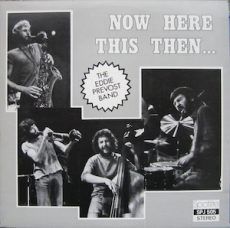
Edwin John Prévost was born June 22, 1942 in Hitchin, Hertfordshire, England of Huguenot heritage. Brought up by a single parent mother in war-damaged London Borough of Bermondsey. He won a state scholarship to Addey and Stanhope Grammar School, Deptford, London. Enrolled in the Boy Scouts Association’s 19th Bermondsey Troop to join the marching band and as a teenager began to get involved with the emerging youth culture music, first skiffle, then introduced to a big jazz record collection of a school friend with rich parents.
Prévost worked part-time after school, purchasing his first snare drum from the Len Hunt Drum Shop on Archer Street. Leaving school at 16, he took various clerical positions, while continuing his musical interests. Immersed in the music of bebop, his playing technique was insufficient, however, New Orleans trad jazz offered scope for his growing musical prowess.
He played in various bands mostly in the East End of London. It was during a tenure with one of these bands he met trumpeter David Ware, who shared a passion for hard-bop jazz. Together, while in their early twenties they formed a modern jazz quintet which included Lou Gare, who was a member of the Mike Westbrook Jazz Orchestra.
In 1965 AMM was co-founded by Eddie, Lou Gare, and Keith Rowe and were shortly joined by Lawrence Sheaff. All had a jazz background and were soon augmented by composer Cornelius Cardew. They stayed together until 1972 when some split and others took their place.
Over the years Prévost has conducted many improvised music workshops. However, as a result of a seminar he conducted at The Guelph Jazz Festival, Canada in 1999, Prévost began to formulate a framework for a workshop based upon a more thorough working of AMM principles and practice.
Percussionist Eddie Prévost, who has recorded twenty albums as a leader, twenty-eight with the free improvisation group AMM, and another thirty as a sideman with Derek Bailey, John Wolf Brennan, John Butcher, Cornelius Cardew, Chris Corsano, Sachiko M, Jim O’Rourke, Bruce Russell, David Sylvian, Telectu, Ken Vandermark, Alexander von Schlippenbach, Christian Wolff, Marilyn Crispell, continues to perform and record.
More Posts: bandleader,history,instrumental,jazz,music,percussion
Daily Dose Of Jazz…
Joe Purrenhage was born on June 21, 1966 and grew up outside the Detroit, Michigan area where he picked up an interest in classic rock, jazz and blues. His formal training was minimal with only a couple of years of piano lessons at a young age and percussion in the high school band. However, he started to teach himself the bass, guitar, keyboards and synthesizer programming.
Enlisting in the Air Force he met many musicians with different infuences and styles. After the Air Force, Joe focused on starting an all original band with some friends and had some limited success with a pop/rock band called Earthbound. In the early 1990s Joe met drummer Marcus McGlown and a musical friendship was started that continues today.
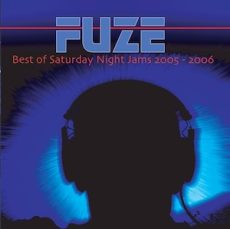
Marcus and Joe started something that had a little more of the ’70s fusion flavor to it. Calling guitarist Craig Wisper they sowed the seeds to the modern fusion group Fuze. Their improvisational approach to music was heard at the Saturday Night Jam where all boundries were dropped for a unique blend of rock and jazz.
By 2000, Doug Nolls joined the band and after building a studio released their debut project across social media garnering 100,00 plus plays over three years.
Joe Purrenhage and Fuze continue to create new music and self-produces their works to keep the fusion spirit alive.
More Posts: bandleader,guitar,history,instrumental,jazz,keyboard,music
Daily Dose Of Jazz…
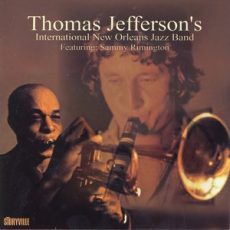
Thomas Jefferson was born on June 20, 1920 in Chicago, Illinois. He played drums and French horn while young before switching to trumpet and was strongly influenced by Louis Armstrong. His professional career began when he was 14 playing with Billie and De De Pierce.
He played with Papa Celestin’s orchestra in 1936, as well as with New Orleans jazz musicians Sidney Desvigne and Armand “Jump” Jackson. The 1950s saw him working with Johnny St. Cyr, Santo Pecora, and George Lewis. In 1966, Andrew Morgan recruited Jefferson to play lead trumpet for the Young Tuxedo Brass Band. Subsequently, Jefferson led a jazz band which performed at the New Orleans jazz club Maison Bourbon.
Thomas recorded sparingly as a leader; sessions include dates for Southland Records in the 1960s and Maison Bourbon Records in the 1970s. Jefferson had a cameo as a jazz musician in the 1975 film Hard Times.
Trumpeter Thomas Jefferson, who recorded six albums as a leader and played Dixieland, died in New Orleans, Louisiana on December 13, 1986.
More Posts: bandleader,history,instrumental,jazz,music,trumpet