

Daily Dose Of Jazz…
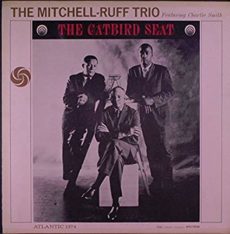
Dwike Mitchell was born Ivory Mitchell Jr. on February 14, 1930 and raised in Dunedin, Florida. He began playing piano around the age of three after his father, who had a job driving a garbage truck, brought home an old piano discarded by its owner. With the help of his mother, who made him play exercises and scales, and a cousin, who had been taking piano lessons herself, he soon displayed an exceptional aptitude for the instrument. He began performing in public at the age of five. His mother, a soloist in her church choir, needed an accompanist and gave the job to her young son. Before long he was playing for the entire Sunday morning service, a role he would continue to perform through the age of seventeen while attending Pinellas High School.
In 1946, Mitchell enlisted and was stationed at Lockbourne Air Force Base, at that time an all-black facility renowned for its excellent music program, where he was assigned to the band. It was here that he heard the music of Rachmaninoff that impacted his piano style development. Post-discharge from the Army, he went to the Philadelphia Musical Academy, where he studied under pianist Agi Jambor. After graduation, he joined Lionel Hampton and changed his name from Ivory to Dwike, at his mother’s suggestion, based on several family names.
By the mid-Fifties, he reunited with French horn player Willie Ruff, when he joined the Hampton orchestra. In 1955 the two men left the orchestra to form the Mitchell-Ruff jazz duo. The duo placed an emphasis on introducing American jazz music in parts of the world unfamiliar with the idiom. Among these, were visits to the Soviet Union in 1959 and to China in 1981. Throughout his duo and trio career they recorded fourteen albums, he also taught piano. In 2012, after becoming ill, he returned to his native South, spending his last months in Jacksonville, Florida. On April 7, 2013 pianist Dwike Mitchell passed away from pancreatic disease.
More Posts: bandleader,educator,history,instrumental,jazz,music,piano
Daily Dose Of Jazz…
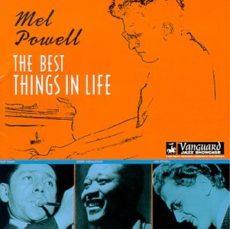
Mel Powell was born Melvin Epstein on February 12, 1923 in The Bronx, New York City to Russian Jewish parents. He began playing piano at age four, taking lessons from, among others, Nadia Reisenberg. His passion for baseball was shattered with a hand injury that turned him to music. His dream of being a concert pianist was also shattered when his older brother took him to see jazz pianist Teddy Wilson play and later to a concert featuring Benny Goodman. By 14, he was performing jazz professionally around New York City.
As early as 1939, he was working with Bobby Hackett, George Brunies, and Zutty Singleton, as well as writing arrangements for Earl Hines. In 1941 he changed his last name from Epstein to Powell, shortly before joining the Benny Goodman band. His style was rooted in the stride style that was the direct precursor to swing piano. His composition The Earl, dedicated to Earl Fatha Hines, one of hi’s piano heroes, was recorded sans drums. Two years with Goodman, led to a brief stint with the CBS radio band before Uncle Sam came calling in 1943 for World War II where he played with Glenn Miller’s Army Air Force Band to the end.
In Paris, France he played with Django Reinhardt, returned briefly to Goodman, then moved to Hollywood and ventured into providing music for movies and cartoons, played himself in the movie A Song Is Born, appearing along with many other famous jazz players, including Louis Armstrong. After developing muscular dystrophy his traveling musician career ended, so he devoted himself to composing.
During the Fifties, he enrolled at the Yale School of Music, recorded the jazz album Thigamigig, became an educator, and was a founding dean of the California Institute of the Arts in Valencia, California. After serving as Provost of the Institute from 1972 to 1976, he was appointed the Roy O. Disney Professor of Music and taught at the institute until shortly before his death. The Pulitzer Prize-winning American composer, pianist, and educator Mel Powell passed away on April 24, 1998 in Sherman Oaks, California.
More Posts: composer,educator,history,instrumental,jazz,music,piano

Daily Dose Of Jazz…
Brian Lemon was born on February 11, 1937 in Nottingham, England to parents who were semi-professional dance-band violinists who both worked for the cigarette manufacturer John Player & Sons. Inspired by Fats Waller and later by Art Tatum and Teddy Wilson, he studied the piano with Reg Conroy, a local teacher, and was soon proficient enough to perform in palais bands in his home city.
By the mid-1950s, at 19, he moved to London and joined Freddy Randall’s group. After that, he worked with George Chisholm and Kenny Baker. Over the years, Brian worked with Benny Goodman, Charlie Watts, Scott Hamilton, Buddy Tate, Milt Jackson, Ben Webster, and Digby Fairweather. He led an octet that played songs by Billy Strayhorn.
For 10 years from 1994 Lemon recorded a sequence of 27 albums for Zephyr, with seven as leader. Zephyr was set up by retired businessman John Bune to record Lemon’s work. Adelaide Hall recorded an album with The Brian Lemon Half-Dozen. A rare copy is at the British Library.
After the development of severe osteoarthritis in his handsLemon retired from music around 2005. Pianist and arranger Brian Lemon passed away on October 11, 2014.
More Posts: bandleader,history,instrumental,jazz,music,piano
Daily Dose Of Jazz…
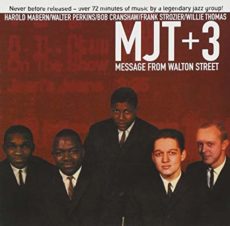
Walter “Baby Sweets” Perkins was born on February 10, 1932 in Chicago, Illinois. Starting out in his hometown, he began his professional career drumming with Ahmad Jamal in 1956–57. He recorded as a leader for Argo Records in 1957 under the name MJT+3 with trumpeter Paul Serrano, Nicky Hill on tenor saxophone, Muhal Richard Abrams on piano, and bassist Bob Cranshaw.
1959 witnessed the regrouping under the same name with Willie Thomas on trumpet, Frank Strozier on alto saxophone, pianist Harold Mabern, and Cranshaw on bass. They recorded four albums for Vee-Jay in 1959 and 1960 and played in Chicago until 1962 when Walter made his move to New York City.
Perkins played with Sonny Rollins in 1962 and accompanied Carmen McRae in 1962–63. By 1964 he was playing with Art Farmer and Teddy Wilson, however, following this he recorded with Rahsaan Roland Kirk, George Shearing, Gene Ammons, Charles Mingus, Billy Taylor, Etta James, J.J. Johnson, Johnny Coles, Booker Ervin, Jaki Byard, Lucky Thompson, Pat Martino, Sonny Stitt, Sonny Criss, Ray Bryant, Duke Pearson, Bobby Timmons, and Charles Earland. And that’s the shortlist as he recorded some 44 albums throughout his career as a sideman.
Drummer Walter Perkins passed away on February 14, 2004 in Queens, New York.
More Posts: bandleader,history,instrumental,jazz,music,vocal
Requisites
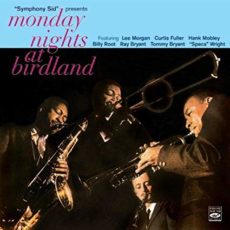
Monday Night at Birdland is a live album that was recorded on April 21, 1958 at Birdland in New York City and released by the Roulette label.
Track Listing | 46:00
- Introduction by Symphony Sid – 0:09
- Walkin’ (Richard Carpenter) – 12:26
- All the Things You Are (Jerome Kern, Oscar Hammerstein II) – 11:27
- Bag’s Groove (Milt Jackson) – 12:29
- There Will Never Be Another You (Harry Warren, Mack Gordon) – 9:29
- Hank Mobley, Billy Root – tenor saxophone
- Lee Morgan – trumpet
- Curtis Fuller – trombone
- Ray Bryant – piano
- Tommy Bryant – bass
- Specs Wright – drums
Monday Night at Birdland | by Eddie Carter
This morning’s subject of discussion takes us to the legendary jazz club Birdland where Monday nights were always special, especially during the fifties and sixties. Musicians and vocalists who were performing would be off that night and the stage would be given to up and coming jazz artists. Thankfully, Roulette Records was available to record the performance on April 21st to give jazz fans, Monday Night at Birdland (Roulette R–52015/SR–52015) to enjoy for all who couldn’t be there in person. The Master of Ceremonies for these weekly jam sessions is the legendary jazz disc jockey, “Symphony Syd” Torin of WBNX in the Bronx, New York; WHOM in Jersey City, New Jersey, and WWRL, WMCA and WJZ in New York City. Syd announces all the tunes on the album and has a brief comment after three of them conclude. The stars of this set are Lee Morgan on trumpet; Curtis Fuller on trombone; Hank Mobley, Billy Root on tenor sax; Ray Bryant on piano; Tommy Bryant on bass and “Specs” Wright on drums. My copy used in this report is the 1988 Spanish Mono reissue (FSR-631) by Fresh Sound Records.
Symphony Syd starts the first side with the song’s introduction; the septet then launches Walkin’ by Richard Carpenter. The trio opens the song evolving into the ensemble’s collective melody. Hank takes the spotlight first wailing enthusiastically followed by Lee who picks up the pace with a bright tone and feisty phrasing. Curtis takes the reins next with a considerable zest for a rousing performance, Ray solos with evident delight in the next reading. “Specs” takes the final scintillating statement in exchange with the front line for a robust finish into the closing chorus and climax. The septet eases the throttle back for the 1939 standard, All The Things You Are by Jerome Kern and Oscar Hammerstein II. Fuller cooks at an easy groove on the opening melody, then infuses the lead solo with a lively simplicity and splendor. Mobley makes his presence felt on a brisk interpretation next, then Morgan illustrates his assured mastery on the trumpet with an engaging performance. Root takes his first solo next, giving an exquisite statement that fits the ensemble’s artistic temperament with a superb reading. Bryant ends with a short solo that’s profoundly moving before the collective reprise and coda.
Side Two opens with Milt Jackson’s contemporary classic, Bags’ Groove; it was written in 1952 and made its debut on Wizard of The Vibes (Blue Note LP 5011), released that year. After a collective theme treatment, Lee is up first, combining lyricism and emotion for a charming lead solo. Curtis soars joyously on the next statement, then comes Hank who takes the next reading with a solid rock-steady rhythm from beginning to end. Billy steps up next for a captivating performance unleashing red-hot notes from his horn and Ray glows brilliantly on the final spot ahead of the out-chorus and ovation. The set ends with an invigorating finale, There Will Never Be Another You by Harry Warren and Mack Gordon, originally written in 1942 and appearing in the musical film, Iceland. The propulsive power of Wright’s drums brings the song to life leading to the speedy melody. Mobley accelerates to race car speed on the opening statement and never decelerates. Root’s tenor sax is an adrenaline rush on the next scintillating solo, followed by Morgan who also gives a spectacular exhibition. Fuller pulls no punches with a buoyant, effervescent interpretation next and Bryant shows he’s a fierce and fervid performer on the closer before the closing chorus and appreciative applause from the crowd.
Monday Night at Birdland was produced by Rudy Traylor, who’s also an arranger, jazz drummer, pianist, and vibraphonist. The sound quality of the album is quite good throughout, and Hank Mobley, Billy Root, Lee Morgan, Curtis Fuller, Ray Bryant, Tommy Bryant, and “Specs” Wright offer the listener the very essence of live jazz. In fact, there’s only one noticeable defect, on Symphony Syd’s introduction of Walkin’, his microphone has a little harshness. I don’t know if this appears on the original album or is exclusive to this LP. I’ll admit, I’m not that familiar with Fresh Sound Records, and don’t know if they’re in that group of European labels like DOL, Doxy, Jazz Wax, Jazz Workshop, Wax Time, etc. However, I’m pretty impressed with what I’ve heard on this particular reissue and the performances are worth the price of admission for me to invite you to seek a copy of Monday Night at Birdland to check out for yourselves and form your own opinion!
~ All The Things You Are, There Will Never Be Another You – Source: JazzStandards.com ~ Bags’ Groove – Source: Wikipedia.org ~ © 2020 by Edward Thomas Carter

More Posts: choice,classic,collectible,collector,history,instrumental,jazz,music,saxophone