


Daily Dose Of Jazz…
Luther Thomas was born on June 23, 1950 in St. Louis, Missouri. Known for his free jazz playing and drawing from funk. Coming out of the Black Artists Group (BAG) of St. Louis in the late Sixties, he was one of the original voices from a scene that also bred such names as Oliver Lake, Julius Hemphill, Baikida Carroll, John Zorn and Joseph Bowie.
Luther played in the Human Arts Ensemble with Charles Bobo Shaw in the 1970s, and led a group called Dizzazz in the early 1980s. He played saxophone for James Chance and the Contortions.
As a leader he had recording sessions from the early 1970s he has recorded eleven albums. They have been reissued on CD as part of Atavistic Records’ Unheard Music Series. In 1998 he settled in Denmark and became a cult musician in Christiania Freetown, performing there weekly.
Alto saxophonist and multi-instrumentalist Luther Thomas was a completely intuitive improvisor and a free spirit who reached a level of intensity on the saxophone reached by very few others, transitioned at the age of 59 on September 8, 2009 in Denmark.

More Posts: bandleader,history,instrumental,jazz,music,saxophone

Daily Dose Of Jazz…
Julia Feldman was born on June 22, 1979 in Samara, Soviet Union to Israeli parents and into a family with a large musical background; her father wa ajeweler who played jazz piano, and a grandfather who was an accomplished conductor and a leader of the city philharmonic orchestra. Classically trained by studying the piano from the age of 5 until the family’s immigration to Israel in 1990 where she continued her piano studies along with jazz improvisation at the High School Of Arts in Jerusalem.
Becoming interested in jazz singing in the last year of her high school studies Feldman began studying voice technique and jazz improvisation along with intensive studies of jazz with the saxophonist Arnie Lawrence at the International Music Center of Jerusalem. While there she studied and performed with known American jazz musicians, such as Evelyn Blakey, Larry Goldings, Armen Donelian, Bob Meyer, Sheila Jordan, Judi Silvano and composer Allen Gershwin, performing the latter’s Walk In The Wilderness.
The late Nineties had her continuing her education and performing with a host of musicians. She has put together her self-titled ensemble and quartet with the former releasing a tribute album in 2006 Words Are Worlds inspired and featuring many standards by Billie Holiday. Other projects she has worked on as a vocalist have delved her into progressive rock Musicca Ficta, vocalist in Radical Shlomo, as pianist, vocalist, co-composer and co-lyricist in Ayulyul and collaboration with ethno-core Jerusalem band Shoom.
Vocalist, composer and educator Julia Feldman, whose singing combines elements of multiple jazz genres, free improvisation and modern classical music, continues to explore, perform and record.
More Posts: bandleader,composer,educator,history,instrumental,jazz,music,vocal
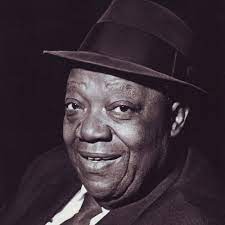
Three Wishes
Nica never missed a chance to travel and while in conversation with Jimmy Rushing she asked if he was given three wishes that would be granted what would they be and he said:
- “I’m doing one of my wishes right now! Being in Japan.”
- “If I had my life to live over, I wouldn’t mind. I’ve always enjoyed every part of it.”
- “One thing I’d like to see is colored shows come back like it used to be in the twenties. Like Cotton Club days ~ entertainers going from table to table! And I’d like to see colored shows on TV, at the right times: not too early or too late. To see a complete show and band, and see the reactions of young people.”
*Excerpt from Three Wishes: An Intimate Look at Jazz Greats ~ Compiled and Photographed by Pannonica de Koenigswarter

More Posts: baroness,history,instrumental,jazz,music,pannonica,piano,three,vocal,wishes
Daily Dose Of Jazz…
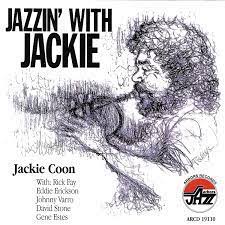
Jackie Coon was born in Beatrice, Nebraska on June 21, 1929 and grew up in Southern California. He was inspired to play trumpet after hearing Louis Armstrong’s West End Blues. He spent a few months with Jack Teagarden’s band and had gigs with Charlie Barnet, Louis Prima, and Earl Hines.
Making his recording debut with Barney Bigard in 1957 and he also played the mellophone on Red Nichols’ version of Battle Hymn of the Republic. Jackie’s decision to stay in California cost him the fame that eluded him, but he worked at Disneyland for nine years, and performed regularly in local clubs and jazz festivals.
It was until 1986 that Coon led his first record session for Sea Breeze. Since 1991 he has recorded fairly often for Arbors. Trumpeter, flügelhornist and cornetist Jackie Coon has become less active in his Eighties.
More Posts: bandleader,cornet,flugelhorn,history,instrumental,jazz,music,trumpet
Daily Dose Of Jazz…
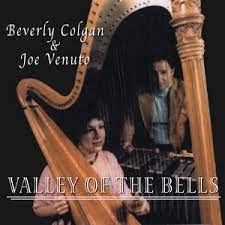
Joseph A. Venuto, Jr. was born on June 20, 1929 in Bronx, New York into an Italian immigrant family where he received his first drum kit from his grandfather. Having had lessons with Henry Adler, he moved on to Phil Kraus to learn mallet percussion. After earning a master’s degree from the Manhattan School of Music, he became a member of the Sauter-Finegan Orchestra, with whom he made his first recordings Doodletown Races on the RCA label in 1953. He was a featured soloist with the orchestra on Solo for Joe and Swingcussion. The DownBeat Reader’s Poll voted him the best vibraphonist that year.
From the mid-1950s, Venuto worked with Billy Byers in the Westchester Workshop, the Kent Harian Orchestra, Bobby Dukoff, and the Johnny Richards Orchestra before joining Radio City Music Hall as a session musician in the recording and television studios. By 1959 he recorded his debut album for Everest Records under his own name.
Between 1953 and 1975 Joe was involved in 104 recording sessions with Jack Teagarden, Kenyon Hopkins, Rex Stewart, The Creed Taylor Orchestra, Irene Kral/Al Cohn Orchestra, Mary Ann McCall, Don Costa, Hal Mooney, Ruth Brown, Gene Krupa and His Orchestra, LaVern Baker, Budd Johnson, Marion Montgomery, Benny Goodman, Shirley Scott, Solomon Burke, Gary McFarland, Johnny Hodges, Hank Jones/Oliver Nelson, and numerous more.
the early 1970s when he was in his Forties, he left New York City and moved to Reno, Nevada. He met, married, performed and recorded with his wife, harpist Bev Colgan, in a harp/vibes duo. Percussionist Joe Venuto, who also played the vibraphone, marimba, bongos and drums, transitioned on Feb. 14, 2019 at age 89.
More Posts: bongos,drums,history,instrumental,jazz,marimba,music,percussion,vibraphone