

Daily Dose Of Jazz…
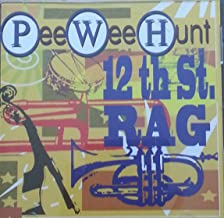
Pee Wee Hunt was born Walter Gerhardt Hunt on May 10, 1907 in Mount Healthy, Ohio. Developing a musical interest at an early age, his mother played the banjo and his father played the violin. The teenager was a banjoist with a local band while he was attending college at Ohio State University where he majored in Electrical Engineering. During his college years, he switched from banjo to trombone. Graduating from the Cincinnati Conservatory of Music, he joined Jean Goldkette’s Orchestra in 1928.
Pee Wee was the co-founder and featured trombonist with the Casa Loma Orchestra, but he left the group in 1943 to work as a Hollywood radio disc jockey before joining the Merchant Marine near the end of World War II. He returned to the West Coast music scene in 1946 and his Twelfth Street Rag became a three million-selling number one hit in 1948.
Hunt was satirized as Pee Wee Runt and his All-Flea Dixieland Band in Tex Avery’s animated MGM cartoon Dixieland Droopy in 1954. His second major hit was Oh! in 1953, his second million-selling disc, which reached number three in the Billboard chart.
Trombonist Pee Wee Hunt passed away after a long illness at age 72, on June 22, 1979 in Plymouth, Massachusetts.

More Posts: bandleader,banjo,history,instrumental,jazz,music,trombone
Daily Dose Of Jazz…
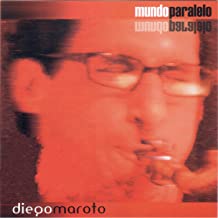
Diego Maroto was born on May 9, 1968 in Mexico City, Mexico. He started taking private lessons in 1985 from Larry Roussell and Alfonso Martinez. He enrolled in the Universidad Iberoamericana in 1987 and the following year joined a jazz workshop at Escuela Superior de Musica where he learned improvisation, arrangement, and composition. He went on to continue private lesson and became an active member of the IAJE, participating in several workshops.
2004 saw Diego putting together a sextet and recording his first album as a leader titled Mundo Paralelo and later in the year shared the stage with Antonio Sanchez at Dizzy’s Club at Lincoln Center. The following year he formed a trio with Gabriel Puentes on drums and Jorge Luri Molina on upright bass and spent the next couple of years performing at festivals, clubs, and paying tribute to Mexican jazz musicians.
As an educator, Maroto has been giving lessons, clinics, and seminars at including Tonica in Guadalajara, Jal alongside saxophonist Donny McCaslin. He is currently in post-production on his soon to be released album Diego Maroto Band Live at the Black Horse.
More Posts: bandleader,composer,history,instrumental,jazz,music,saxophone
Daily Dose Of Jazz…
Jack Bland was born on May 8, 1899 in Sedalia, Missouri and learned to play the banjo. In 1924 he co-founded the Mound City Blue Blowers with Red McKenzie in St. Louis, Missouri. Their first hit record was Arkansas Blues, a success in Chicago and the American midwest. After Eddie Lang joined the group towards the end of 1924, they toured England.
The late 1920s saw Bland playing more cello and guitar and in 1929, Lang left the group, replaced by Gene Krupa. Also in 1929, the Blue Blowers appeared in a 1929 short film, The Opry House. Muggsy Spanier, Coleman Hawkins, and Eddie Condon would all play in the ensemble in the 1930s, which moved to more of a Dixieland sound.
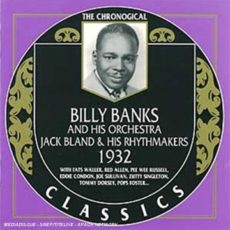
Bland did session work in New York City with the Billy Banks Orchestra in the 1930s, with Pee Wee Russell, Red Allen, and Zutty Singleton. Following this, he recorded with a group called the Rhythmakers that included Pops Foster and Fats Waller at times.
By the 1940s Jack was playing on 52nd Street at Jimmy Ryan’s Club, playing with Allen and Singleton as well as Edmond Hall, Vic Dickenson, Ike Quebec, and Hot Lips Page. Some of their sessions were recorded by Milt Gabler and released on Commodore Records. From 1942 to 1944 he played with Art Hodes and also with Muggsy Spanier; he led his own band from 1944 to 1950.
In the 1950s, guitarist and banjoist Jack Bland moved to Los Angeles, California, retired from performing, and worked as a taxicab driver until he passed away in August 1968.
More Posts: banjo,cello,guitar,history,instrumental,jazz,music
Daily Dose Of Jazz…
Edward Inge born May 7, 1906 in Kansas City, Missouri and played clarinet from age 12. By 18 he was playing with George Reynolds’s Orchestra, then in the 1920s worked with Dewey Jackson, Art Sims & His Creole Roof Orchestra, and Oscar Young.
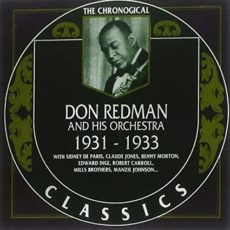
In 1930, he became a member of McKinney’s Cotton Pickers, then was offered a spot in Don Redman’s band in 1931, where he played until 1939. From there he replaced Don Byas in Andy Kirk’s band, remaining with Kirk until 1943.
By the mid~1940s Inge became more in demand as an arranger, writing charts for Louis Armstrong, Redman, and Jimmie Lunceford among many others over the course of his career. He led his own band in Cleveland, Ohio in the middle of the 1940s, then worked out of Buffalo, New York in the 1950s and 1960s.
In the 1960s he played with Cecil Johnson, and in the 1970s with C.Q. Price. His recording credits include work with The Mills Brothers, Cab Calloway, and The Boswell Sisters. Clarinetist and arranger Edward Inge passed away on October 8, 1988.

Daily Dose Of Jazz…
Louis Landon was born on May 6, 1931 in Yonkers, New York and began studying piano at age five, playing classical compositions. Shortly afterward his parents got him piano lessons. In 1960 his family relocated to Studio City, California where his father, Leo De Lyon, is the voice actor best known as Brain and Spook in the popular television cartoon, Top Cat.
In the early 1970s, Landon transferred from Stony Brook University to Berklee College of Music in Boston, Massachusetts to pursue his studies in jazz. While playing in and around Boston, Landon met saxophonist, John Payne, and toured with the John Payne Band for three years from 1974 to1977. During that period they recorded four albums, to which he contributed his songwriting skills, and incorporate a jazz fusion style into their sound and opened for Weather Report, The Tony Williams Lifetime, John McLaughlin.
Leaving Boston for Manhattan, he formed a jazz fusion band called Nightfire, and did studio work and freelanced around New York City. During the late 1970s, Landon auditioned for and landed the position of the keyboardist in the John Hall band. Appearing on Hall’s Columbia Records LP, Power, he subsequently began touring with composer and pop singer Rupert Holmes. He toured extensively during the course of the next few years across the country with Hall and Holmes as well as Mikhail Baryshnikov and Pucho & His Latin Soul Brothers.
He has also performed with The Doobie Brothers, Bonnie Raitt, and John Hall at the 1979 No Nukes concert that produced a triple live album released in 1980 that Landon is credited on as a keyboard player.
Composer, solo pianist for peace, singer-songwriter, recording artist, and touring musician from New York City, Louis Landon currently resides in Sedona, Arizona.
More Posts: bandleader,history,instrumental,jazz,music,piano,singer,songwriter