

Daily Dose Of Jazz…
Charles Valdez “Truck” Parham was born in Chicago, Illinois on January 25, 1911 and was first a professional boxer and football player with the Chicago Negro All Stars. He played drums before settling on bass, and studied under Walter Page. From 1932~34 he was part of Zack Whyte’s band, playing primarily in Cincinnati, Ohio but was mostly a singer and valet for the band, the latter activity giving rise to his nickname.
Returning home he played through the Thirties with Zutty Singleton, Roy Eldridge, Art Tatum, and Bob Shoffner. 1940 saw Truck joining Earl Hines’s orchestra, remaining for two years;then on to be hired by Jimmie Lunceford for five years until 1947.
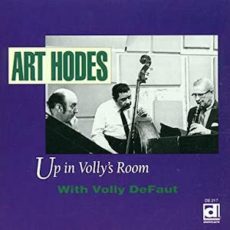
During the 1950s Parham continued to play revival gigs with Muggsy Spanier,, Herbie Fields, Hines again, and Louie Bellson. He spent much of the 1960s working with Art Hodes, and played in numerous Dixieland jazz groups later in his career. Recording profusely as a sideman, he continued playing into the 2000s, being a member of Franz Jackson’s band in 2000.
Double bassist Truck Parham, who never recorded as a leader transitioned in his hometown of Chicago on June 5, 2002.
More Posts: bass,history,instrumental,jazz,music
Daily Dose Of Jazz…
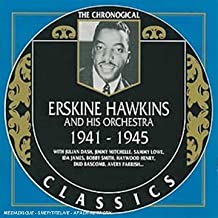
James Avery Parrish was born on January 24, 1917 in Birmingham, Alabama. Graduating from Parker High School he went on to matriculate Alabama State Teachers College, where he played in the Bama State Collegians, an ensemble led by Erskine Hawkins. He remained in Hawkins’s employ performing and arranging until 1942 and recorded with him extensively. Composing the music to After Hours, a 1940 recording of the tune with Hawkins’s orchestra resulted in its becoming a jazz standard.
Driving to gigs between Pittsburgh and Chattanooga in 1942 he was injured in an overturned car crash that killed Hawkin’s trumpeter Marcellus Green, one of the five men in the vehicle. Avery left Hawkins later that year and moved to California, where hebecame a commercially successful solo pianist. Hit in the head by a bar stool during a bar fight in 1943l put him in hospital for a few months. His injuries left him partly paralyzed, thus ending his career and ability to play music for the rest of his life.
Pianist, composer and arranger Avery Parrish transitioned of unknown causes on December 10, 1959. He was posthumously inducted twenty years later into the Alabama Jazz Hall of Fame.
More Posts: arranger,composer,history,instrumental,jazz,music,piano
Requisites
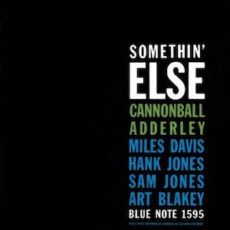
Somethin’ Else ~ Cannonball Adderley | By Eddie Carter
Cannonball Adderley steps into the spotlight for this morning’s discussion with a 1958 album that has not only stood the test of time but is truly, Somethin’ Else (Blue Note BLP 1595/BST 81595). It was Cannonball’s only Blue Note release and the alto saxophonist is backed by four exceptional musicians, Miles Davis on trumpet, Hank Jones on piano, Sam Jones on bass, and Art Blakey on drums. My copy used in this report is the 2005 Classic Records Mono Audiophile reissue sharing the original catalog number.
Side One opens with Autumn Leaves by Joseph Kosma, Jacques Prevert, and Johnny Mercer. The trio introduces the song, then Miles’ muted trumpet delivers a gorgeous melody. Cannonball takes the lead with an affectionate opening solo. Miles follows with a warm, lyrical interpretation, and Hank gives a beautifully elegant closing statement ahead of an exquisite finale. Love For Sale by Cole Porter first appeared in his musical, The New Yorkers (1930). Hank opens with a deceptively gentle introduction that segues into a gorgeous, muted melody by Miles. Cannonball takes over for the song’s only solo and articulates his thoughts with precise execution. Miles returns for the closing chorus and the rhythm section fades out gracefully.
Side Two starts with the ensemble exploring the blues on Somethin’ Else by Miles Davis. The front line establishes an easy groove on the opening chorus. Miles is up first and builds an infectious solo that’ll get some fingers snapping and toes tapping. Cannonball takes flight next with a cheerfully, carefree performance, then Hank sparkles on a short statement. Sam and Art work wonderfully together complementing the soloists. The front line has a final exchange before a slow dissolve into nothingness.
One For Daddy-O by Nat Adderley is a slow blues tribute to the legendary Chicago jazz announcer, Holmes “Daddy-O” Daylie! The trio strolls into a laid-back introduction before both horns take over to deliver the melody. Cannonball takes the lead this time and swings easily on the first solo. Miles dispenses some cool jazz on the second statement. Hank makes a brief comment on the next reading before the principal soloists deliver one final comment each ahead of the ending and Miles speaking to Alfred Lion. Dancing In The Dark by Arthur Schwartz and Howard Dietz is from the musical revue, The Band Wagon (1931). Cannonball has the spotlight to himself and opens with a delicately pretty melody. As the song’s only soloist, he delivers a sensuously tender interpretation and the trio’s subtle support fits comfortably like a glove into their tender ending.
Somethin’ Else was originally produced by Alfred Lion and engineered by Rudy Van Gelder. This Classic Records reissue was remastered by Bernie Grundman and utilizes Quiex SV-P 200-gram premium vinyl. The record is silent until the music starts, and the sound quality is superb with a breathtaking soundstage that comes alive. The only complaint I have with this album is a manufacturing problem on Side Two. One For Daddy-O begins a few seconds into Hank Jones’ introduction, rather than the beginning of the song. Despite this issue, the music is outstanding with an incredible lineup that delivers the goods on every track. If you’re a jazz fan and are looking for a soothing album to enjoy anytime, I submit for your consideration, Somethin’ Else by Cannonball Adderley. The musicians are as good as it gets, and together they make magic that you’ll treasure with every listen
~ Autumn Leaves, Love For Sale, Dancing In The Dark – Source: JazzStandards.com © 2021 by Edward Thomas Carter

More Posts: choice,classic,collectible,collector,history,instrumental,jazz,music,saxophone
Daily Dose Of Jazz…
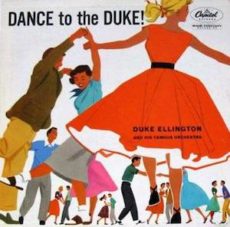
David Black, born January 23, 1928 in Philadelphia, Pennsylvania, started out as the drummer in the house band at the Philadelphia Blue Note Jazz Club where he played with the likes of Charlie Parker, Buddy DeFranco and Zoot Sims.
From 1953 to 1955 Black was a part of Duke Ellington’s Orchestra until he contracted polio, forcing him to leave the band. After recovering, he moved to the San Francisco Bay Area and partnered with Bob Scobey until the latter’s death in 1963.
Continuing to perform with Bay Area and various international jazz musicians, drummer Dave Black, most notable for his work with Duke Ellington, transitioned on December 4, 2006
More Posts: bandleader,drums,history,instrumental,jazz,music
Daily Dose Of Jazz…
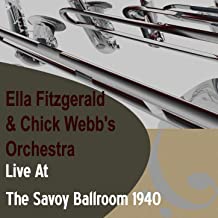
Irving “Mouse” Randolph was born in St. Louis, Missouri on January 22, 1909 and started off playing on riverboats with Fate Marable’s ensemble. Following this he played in numerous territory bands, including those of Walt Farrington, Willie Austin, Art Sims, Norman Mason, Floyd Campbell, Alphonse Trent, and J. Frank Terry.
From 1931 to 1933 he was in Kansas City, Missouri playing in Andy Kirk’s Twelve Clouds of Joy, and then played briefly with Fletcher Henderson and Benny Carter in 1934. 1935 to 1939 saw Mouse playing in Cab Calloway’s orchestra, then departed to play with the Ella Fitzgerald Orchestra under the direction of Chick Webb for three years ending in 1942.
By 1943 he was playing with Don Redman and from 1944 to 1947 he did a stint with Edmond Hall. Randolph continued to play into the Seventies, including with the Chick Morrison Orchestra. He never recorded as a bandleader, though he recorded copiously with Henderson, Carter, and Calloway.
Trumpeter Mouse Randolph, who was prominent during the swing era, transitioned on December 12, 1997 in New York City, just six weeks shy of his 89th birthday.
More Posts: history,instrumental,jazz,music,trumpet