

Daily Dose Of Jazz…
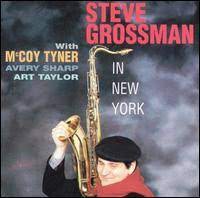
Steven Mark Grossman was born on January 18, 1951 in Brooklyn, New York to Rosalind, an amateur pianist, and Irving, an RCA salesman and later president of KLH Research and Development Corporation. At 18, he went on to replace Wayne Shorter in Miles Davis’ jazz-fusion band. Then, from 1971 to 1973, he was in Elvin Jones’ band.
In the late 1970s, he was part of the Stone Alliance trio with Don Alias and Gene Perla. The group released four albums during this period, including one featuring Brazilian trumpeter Márcio Montarroyos. The albums also feature an array of other musicians. They went on to release three live reunion albums during the 2000s.
Fusion and hard bop saxophonist Steve Grossman passed away of cardiac arrest in Glen Cove, New York, on August 13, 2020, at the age of 69.
More Posts: bandleader,history,instrumental,jazz,music,saxophone
Daily Dose Of Jazz…
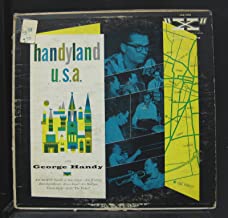
George Handy, born George Joseph Hendleman on January 17, 1920 in New York City, where his musical beginnings were fostered under the tutelage of composer Aaron Copland.
He first worked professionally as a swing pianist for Michael Loring in 1938. Soon afterward George was drafted into the United States Army in 1940. Post WWII, from 1944 to 1946 he became a member of the Boyd Raeburn Orchestra, composing and performing on piano. This was during a time when many big bands were transforming their musical tendencies toward bebop. Leaving the orchestra briefly to work for Paramount Studios, he returned to Raeburn quickly. During this period he entered one of his most creative periods, doing arrangements of older standards with a distinctly bebop quality.
A rift between him and Raeburn, just as he was entering his prime, forced him to depart the group. Handy continued to arrange for other musicians in his later career.
Pianist, arranger and composer George Handy, best remembered in retrospect for his bebop arrangements, transitioned in Harris, New York, on January 8, 1997 at the age of 76, from heart disease.
More Posts: arranger,composer,history,instrumental,jazz,music,piano
Requisites
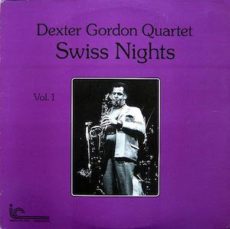
Swiss Nights, Vol. 1 ~ Dexter Gordon Quartet | By Eddie Carter
The Dexter Gordon Quartet steps into the spotlight for this morning’s discussion with Swiss Nights, Vol. 1 (SteepleChase SCS-1050), the first of three albums recorded live at The Zürich Jazz Festival ’75. Dexter’s joined on stage by an all-star rhythm section, Kenny Drew on piano, Niels-Henning Ørsted Pedersen on bass, and Alex Riel on drums. My copy used in this report is the 1976 US Stereo release (Inner City Records IC 2050).
Side One starts with Gordon introducing the first number, an uptempo rendition of Tenor Madness by Sonny Rollins. The quartet launches the melody briskly, and Dexter gets things off to a rousing start on the lead solo. Kenny maintains the momentum on a swiftly paced performance next. Niels-Henning lays down a rocking beat on the third reading. Alex sizzles in a brief exchange with the leader ahead of the ending and the audience’s ovation.
Wave by Antônio Carlos Jobim is one of his most beautiful compositions. Jobim first recorded it as the title tune of his 1967 album. After Dex’s introduction, the rhythm section gently sets the mood for this bossa nova. Gordon shines brightly on the melody and cooks with conviction on the opening statement. Drew is up next with a delightfully creative interpretation, then Pedersen delivers a melodic, rich-toned reading. Gordon returns for a few final comments into the closing chorus.
Side Two begins with Dexter quoting a few of the lyrics to announce You’ve Changed by Bill Carey and Carl Fischer. This is a poignant story beautifully told by the quartet with a delicately gentle melody. Dexter makes the opening solo his own with a glowingly tender performance. Kenny responds with an emotionally touching reading, then the leader returns for an especially moving closing statement that’s very nice.
The set ends with Days of Wine and Roses by Henry Mancini and Johnny Mercer. This old favorite is the title song from the 1962 film and the ensemble opens with an infectious opening chorus. Gordon is up first expressing pleasure on the first statement. Drew swings easily on the following interpretation, then Pedersen takes great delight on the next reading. Dexter reappears briefly preceding the quartet’s closing theme and exit. Swiss Nights, Vol. 1 was produced by Nils Winther. The recording and mixing engineer is Helmuth Kolbe. The album transports the listener to the festival with a solid soundstage that doesn’t disappoint and captures The Dexter Gordon Quartet in fine form. Now that I have Swiss Nights, Vol. 1 in my library, I’ll certainly be seeking out the two remaining volumes in this series. If you’re a fan of Dexter Gordon and love live jazz, this is one I highly recommend!
~ Swiss Nights, Vol. 2 (SteepleChase Records SCS-1090), Swiss Nights, Vol. 3 (SteepleChase Records SCS-1110), Wave (A&M records SP-3002) – Source: Discogs.com
~ Days of Wine and Roses, Wave – Source: JazzStandards.com
~ You’ve Changed – Source: Wikipedia.org
© 2021 by Edward Thomas Carter

More Posts: choice,classic,collectible,collector,history,instrumental,jazz,music,saxophone
Daily Dose Of Jazz…
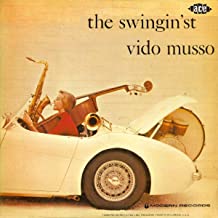
Vido William Musso born Vito Gugliermo Musso on January 16, 1913 in Palermo, Sicily. He moved with his family to the U.S. in July 1920, having arrived at the Port of New York on the Italian steamship Patria. They lived in Detroit, where Musso started learning to play clarinet. Ten years later, he went to Los Angeles, California and formed a big band with Stan Kenton in 1935.
Musso dropped out the next year to work with Gus Arnheim, Benny Goodman, and Gene Krupa. He accompanied Billie Holiday and pianist Teddy Wilson on recordings in the late 1930s. He replaced Bunny Berigan as the leader of his band and tried unsuccessfully at other times during the 1930s and 1940s to be a big band leader. However, most of his career was spent as a sideman.
Returning to Goodman, he was a member of big bands led by Harry James, Woody Herman, and Tommy Dorsey. He went back to play with Kenton during the middle 1940s and having moved to California, he retired around 1975.
Saxophonist Vido Musso, who recorded as a leader in the Forties and Fifties for Savoy, Trilon, Arco, Fantasy, RPM, Crown, and Modern record labels, transitioned on January 9, 1982 in Rancho Mirage, California.
More Posts: bandleader,history,instrumental,jazz,music,saxophone
Daily Dose Of Jazz…
Arthur Shapiro was born on January 15, 1916 in Denver, Colorado, and began on trumpet at age 13, ultimately picking up bass as his prominent instrument at 18. By the late 1930s he was playing with Wingy Manone, Joe Marsala, Eddie Condon, and Chu Berry. From 1938 to 1940 he played with Paul Whiteman, then returned to play with Marsala in addition to working with Bobby Hackett.
Moving to Hollywood, California in the early 1940s, Artie started playing with Jack Teagarden and Joe Sullivan before serving in the United States Army. In 1947 he returned to music, playing with Benny Goodman.
As an accompanist, he worked with, among others, Billie Holiday, Peggy Lee, Anita O’Day, Doris Day, Bing Crosby and Frank Sinatra. His list of recording credits runs to more than 100 during his period of activity, stretching into the late 1960s. Bassist Artie Shapiro transitioned in Los Angeles, California on March 24, 2003.
More Posts: bass,history,instrumental,jazz,music