

Requisites
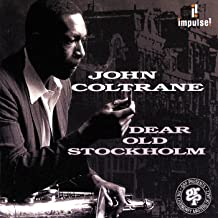
Dear Old Stockholm ~ John Coltrane | By Eddie Carter
Fans of modern Jazz know that during his lifetime, John William Coltrane redefined the sound of jazz on the tenor sax, making some of his most important contributions while recording for Impulse Records from 1961 to his passing in 1967. It’s with one of the lesser-known releases in his discography that I begin this first report of 2021. Dear Old Stockholm (Impulse GRD-120) is a 1993 CD-album featuring Coltrane playing to the beat of a different drummer, Roy Haynes. Roy replaced the quartet’s regular drummer, Elvin Jones on the two sessions comprising this delightful album, April 29, 1963 (tracks: 1 and 2), and May 26, 1965 (tracks: 3 to 5). McCoy Tyner on piano, and Jimmy Garrison on bass complete the quartet.
Dear Old Stockholm is a traditional Swedish folk song that Miles Davis liked enough to record several times. John adapts this tune as easily as if it were created for jazz with a very impressive opening statement, weaving gracefully in unison with Jimmy’s bass and Roy’s assertive timekeeping. McCoy contributes some stirring solo work on the finale before the foursome takes the song out.
After The Rain is one of the most beautiful compositions Coltrane ever wrote and opens with a passionate gracefulness by the saxophonist on the melody. He continues with an intimate reading conveying a refined elegance leading to a hauntingly beautiful climax. The quartet returns to uptempo on the saxophonist’s One Down, One Up. John charges into the lead solo of this fire-breathing cooker with an incandescent performance relentlessly. McCoy continues the aggressive beat with a dynamic high-octane reading that’ll leave the listener’s ears sizzling. The tenor man gives a few final exhilarating statements before the song’s closing moments. After The Crescent opens with an introduction to the children’s song, Ring Around The Rosie. The similarity ends there because Trane and his bandmates take us on an exuberant joyride with two ferocious readings from Tyner and Coltrane. The walloping tones from Garrison’s bass and the brilliant brushwork by Haynes give both soloists a propulsive lift that’s exciting preceding the ensemble’s closing chorus.
The closer is a mid~tempo tune by John titled Dear Lord. This song is a perfect vehicle for a passionate performance by John Coltrane who shows his lyrical side on the first solo with charming simplicity. McCoy makes an indelible impression on the closing statement with a delicately tender interpretation, ahead of John’s return for the emotionally touching coda. The album was originally recorded by Rudy Van Gelder and digitally remastered by Robert Stoughton.
In my opinion, he did a fantastic job because the sound quality is superb with a stunning soundstage that brings the musicians into your listening room for your enjoyment. To some fans, this CD-album may not have the infinitely explosive spirit of the classic Coltrane quartet with Elvin Jones that so many are acquainted with. However, in my opinion, Dear Old Stockholm is an enticing invitation to explore and enjoy a fascinating album showing John Coltrane’s versatility as one of the legendary masters of jazz! Do your ears a favor and check it out, it’s sure to become a welcome addition to your jazz collection!
Dear Old Stockholm – Source: Wikipedia.org © 2020 by Edward Thomas Carter
More Posts: choice,classic,collectible,collector,history,instrumental,jazz,music,saxophone
Daily Dose Of Jazz…
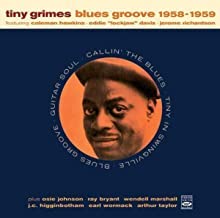
Musa Kaleem was born Orlando Wright on January 3, 1921 in Wheeling, West Virginia. He bought a clarinet in 1937, and by 1939 was touring as a saxophonist with the El Rodgers Mystics of Rhythm, featuring Eddie Jefferson on lead vocals.
In the early 1940s he began using the name Gonga Musa, and then Musa Kaleem, the name by which he is best known. He played often in Pittsburgh, Pennsylvania in the Fortiess, gigging with Erroll Garner, Mary Lou Williams, and Art Blakey.
In the middle of the decade he toured with Fletcher Henderson, then relocated to New York City and played with Duke Ellington, Count Basie, Jimmie Lunceford, and the Savoy Sultans by the end of the 1940s. The 1950s saw Kaleem playing on cruise ships, however, upon his return in the 1960s he played with James Moody, Coleman Hawkins, Tiny Grimes, and rejoined Jefferson.
Saxophonist and flautist Musa Kaleem passed away on March 26, 1988 in Los Angeles, California.
Daily Dose Of Jazz…
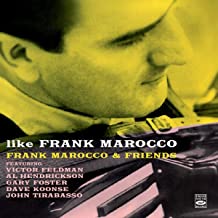
Frank L. Marocco was born January 2, 1931 in Joliet, Illinois but grew up in Waukegan, near Chicago, Illinois. At the age of seven years, his parents enrolled him in a six-week beginner class for learning to play the accordion. His first teacher was George Stefani, who supervised the young accordionist for nine years. Beginning with studying classical music, he soon encouraged the young musician to explore other musical genres. He went on to study piano and clarinet, as well as music theory, harmony, and composition.
At 17, Frank won the first prize in the 1948 Chicago Musicland Festival, and a guest performance with the Chicago Pops Orchestra. His success sent him on a professional music career, establishing a trio and touring the Midwestern states. In the early 1950s he married and moved to Los Angeles, California.
Creating a new band, Marocco played hotels and clubs in Las Vegas, Nevada, Lake Tahoe, Nevada and Palm Springs, California. He later began working in Hollywood, where television studios and movie production companies provided him a successful career.
In the 1960s, Frank recorded a solo album released by Verve Records, worked together with Brian Wilson and the Beach Boys, and performed on the world-famous album Pet Sounds. He performed on a USO tour in the Pacific, appearing onstage with Bob Hope, and also played in the Les Brown big band, during six Love Boat cruises. He performed and recorded in collaboration with hundreds of world-famous jazz musicians, classical artists and conductors during his career.
Marocco wrote and arranged music for solo, duet, and orchestra in a wide variety of musical styles, including jazz, popular standards, international, Latin, religious, and classical. He was the musical director and conductor of an annual music camp, the Frank Marocco Accordion Event, that brought together over 50 accordionists from around the U.S. and Canada.
Accordionist Frank Marocco passed away on March 3, 2012 at his home in San Fernando Valley, California from complications following hip replacement surgery. He was 81 years old.
More Posts: accordion,arranger,bandleader,composer,history,instrumental,jazz,music
Daily Dose Of Jazz…
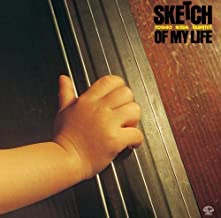
Yoshio Ikeda (池田芳夫) was born on January 1, 1942 in Osaka, Japan. He received formal training in bass before studying jazz with Gary Peacock in the 1960s.
He led his own small groups in the Seventies, and has worked with Terumasa Hino, Masabumi Kikuchi, Steve Lacy, Akira Miyazawa, Yuji Ohno, Allan Praskin, Masahiko Sato, Masahiko Togashi, Kiyoshi Sugimoto, Aki Takase, and Sadao Watanabe. Double bassist Yoshio Ikeda continues to perform and record.
More Posts: bandleader,bass,history,instrumental,jazz,music
The Quarantined Jazz Voyager
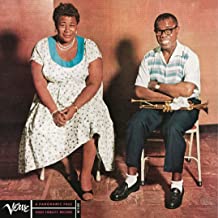
Ella and Louis is a 1956 studio album by Ella Fitzgerald and Louis Armstrong, accompanied by the Oscar Peterson Quartet, This was the first of three albums that they were to record together for Verve Records, later followed by 1957’s Ella and Louis Again and 1959’s Porgy and Bess. All three were released as The Complete Ella Fitzgerald & Louis Armstrong on Verve.
Norman Granz, the founder of the Verve label, selected eleven ballads for the duo, mainly played in a slow or moderate tempo. Recording began August 16, 1956, at the new, and now iconic, Capitol Studios in Hollywood, California. Though Granz produced the album, Armstrong was given final say over songs and keys. Val Valentin was the session engineer and the photography was taken by Phil Stern.
Tracklist
Side One
- Can’t We Be Friends? (Paul James, Kay Swift) ~ 3:47
- Isn’t This A Lovely Day? (Irving Berlin) ~ 6:16
- Moonlight In Vermont (John Blackburn/Karl Suessdorf) ~ 3:42
- They Can’t Take That Away From Me (George & Ira Gerrshwin) ! 4:39
- Under A Blanket Of Blue (Jerry Livingston/Al J. Neiburg/Marty Symes) ~ 4:18
- Tenderly(Walter Gross/Jack Lawrence) ~ 5:10
- A Foggy Day (George & Ira Gershwin) ~ 4:32
- Stars Fell On Alabama (Mitchelll Parish/Frank Perkins) ~ 3:34
- Cheek To Cheek (Irving Berlin) ~ 5:53
- The Nearness Of You (Hoagy Carmichael/Ned Washington) ~ 5:42
- April In Paris (Vernon Duke/Yip Harburg) ~ 6:33
- Ella Fitzgerald – vocals
- Louis Armstrong – vocals, trumpet
- Oscar Peterson – piano
- Herb Ellis – guitar
- Ray Brown – bass
- Buddy Rich – drums

More Posts: adventure,album,club,genius,jazz,museum,music,preserving,restaurant,travel,vocal