

Daily Dose Of Jazz…
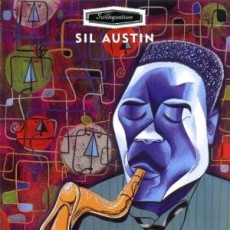
Sil Austin was born Sylvester Austin on September 17, 1929 in Dunnelion, Florida and taught himself to play as a 12 year old. He won the Ted Mack Amateur Hour in St. Petersburg, Florida in 1945, playing “Danny Boy”. His performance brought him a record deal with Mercury Records and he moved to New York and studied at the Juilliard School of Music.
Austin played briefly with Roy Eldridge, Cootie Williams in 1951–52 and Tiny Bradshaw from 1952-54, before setting up his own successful touring group. He recorded over 30 albums for Mercury with a number of Top 40 hits on the pop charts with tunes like “Danny Boy” (his signature), “Slow Walk” and “My Mother’s Eyes”.
Sil Austin, a saxophonist who considered Coleman Hawkins, Lester Young, and Sonny Stitt as his major influences, passed away of prostate cancer on September 1, 2001.
More Posts: saxophone
Daily Dose Of Jazz…
Hamiet Bluiett was born on September 16, 1940 in Brooklyn a.k.a. Lovejoy, Illinois, that was founded as a free black refuge community in the 1830s. As a child, he studied piano, trumpet, and clarinet, but was attracted most strongly to the baritone saxophone from the age of ten. He began his musical career by playing the clarinet for barrelhouse dances in Brooklyn, Illinois, before joining the Navy band in 1961. He attended Southern Illinois University Carbondale.
Following his time in the Navy, he returned to the St. Louis area in the mid-1960s. In the late 1960s Bluiett co-founded the Black Artists’ Group (BAG) in St. Louis, Missouri, comprised of a collective dedicated to fostering creative work in theater, visual arts, dance, poetry, film, and music. He led the BAG big band during 1968 and 1969.
Bluiett moved to New York City in 1969 and joined the Charles Mingus Quintet and the Sam Rivers large ensemble. In 1976 he co-founded the World Saxophone Quartet with two other BAG members, Julius Hemphill and Oliver Lake and David Murray. The group would quickly become jazz music’s most renowned saxophone quartet. He has remained a champion of the somewhat unwieldy baritone saxophone, organizing large groups of baritone saxophones.
In the 1980s, he also founded The Clarinet Family, a group of eight clarinetists playing clarinets of various sizes ranging from E-flat soprano to contrabass. Since the 1990s he has led a virtuosic quartet, the Bluiett Baritone Nation, made up entirely of baritone saxophones, with drum set accompaniment. His return to his hometown in 2002 affords him the opportunity to gig, perform with students from Neighborhood Music School in New Haven, Connecticut under the name of “Hamiet Bluiett and the Improvisational Youth Orchestra”.
Baritone saxophonist Hamiet Bluiett recorded over three-dozen albums and continued to perform, record and tour until his passing on October 4, 2018 at the age of 78 in St. Louis, Missouri.
Daily Dose Of Jazz…
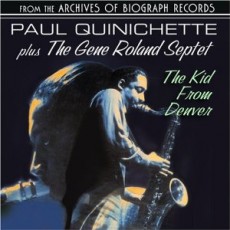
Gene M. Roland was born September 15, 1921 in Dallas, Texas and learned to play several instruments, such as trumpet and piano. He received a degree in music from the University of North Texas College of Music, first hooked up with Stan Kenton in 1944, playing fifth trumpet and contributing arrangements. He worked briefly with Lionel Hampton and Lucky Millinder, and then rejoined Kenton in 1945 as a trombonist and writer, arranging the hit “Tampico”.
In 1946 Roland played piano and wrote for a group that included Stan Getz, Zoot Sims, Jimmy Giuffre and Herbie Steward , and would lead Woody Herman‘s Four Brothers Second Herd. By the late 40s, he played trombone with Georgie Auld, trumpet with Count Basie, Charlie Barnet and Lucky Millinder and contributed charts for the big bands of Claude Thornhill and Artie Shaw. He led a giant rehearsal band in 1950 that included Dizzy Gillespie and Charlie Parker, wrote for Kenton in 1951, Dan Terry in 1954, and Woody Herman from 1956-58, for whom he contributed 65 arrangements.
Gene was a major force in Kenton’s mellophonium band of the early 1960s, not only writing for the ensemble, but also performing as one of the mellophoniums, occasionally doubling on soprano sax with the orchestra. He provided the robust vocal on “Hawaiian Teenage Girl”, and remained active as a writer in the 1960s and 70s, working with Copenhagen’s Radiohus Orchestra and playing trumpet, piano and tenor with his own groups.
Arranger, composer, vocalist and multi-instrumentalist Gene Roland, who was the only arranger to write for Kenton in all four decades of the band’s existence, passed away on August 11, 1982 in New York City.
Daily Dose Of Jazz…
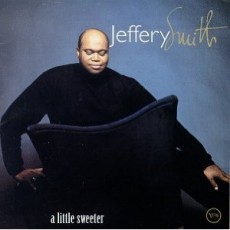
Jeffery Smith was born on September 14, 1955 in Queens, New York and began honing his voice at a very early age, under the influence of his mother, a classical singer. At the age of 18, he moved to Los Angeles, California and worked as a singer, actor and artist, landing several bit parts in television, and film, while performing in the local clubs.
In 1980 he starred in the production of “Hollywood & Highland” and was awarded the coveted 1981 Drama Critic’s Award, from Drama Logue Magazine. Returning to New York in 1985, the baritone co-starred on stage in “Jesus Christ Superstar”, “Hair” and “Capitol Cakewalk”, as well as performing in most of the city’s major clubs through 1991.
By 1991, Smith’s visit to Paris lasted for 7 years and while working with Claude Bolling , he recorded four albums, had two world tours with the big band, sang commercial jingles, and was signed with Universal/Verve for a 3-album deal, all of which received international acclaim. His 1995 debut recording “Ramona” was dedicated to his mother and produced by Shirley Horn, and his U.S. debut came in 1998 with the release of “A Little Sweeter” on the Verve label.
Jeffery Smith has worked with Wynton Marsalis, the Jazz at Lincoln Center Orchestra, Dianne Reeves, Kenny Barron, Regina Carter, Joe Lovano, Dee Dee Bridgewater and TK Blue.. He was the founder of the jazz cultivation not-for-profit Tri-Loxodonta Productions, a not-for-profit music organization cultivating jazz in upstate New York. Vocalist Jeffery Smith continued to perform internationally and record until he passed away on July 5, 2012..
More Posts: vocal

Requisites
Movin’ Along ~ Wes Montgomery | By Eddie Carter
Submitted for your approval this morning is an overlooked, underrated gem by one of my favorite jazz guitarists: Wes Montgomery. Movin’ Along (Riverside RLP 342/RLP 9342) was his third release as a leader and one of six albums he recorded in 1960. Two as a leader, plus one each with Cannonball Adderley, Nat Adderley, Harold Land and his brothers. All six albums received critical acclaim, underscoring how rapidly Wes Montgomery’s star was rising. The personnel on this release are James Clay on flute (tracks: A1, A2, A4, B1) and tenor sax (B2); Wes Montgomery on guitar (A1, A3, B2, B3) and bass guitar (A2, A4, B1); Victor Feldman on piano, Sam Jones on bass, and Louis Hayes on drums. I own the 1977 Victor Musical Industries Japanese Mono reissue (Riverside SMJ-6199M).
Wes Montgomery’s Movin’ Along, which opens the album, is a perfect tune to listen to and unwind to after a long workday or week. The quintet’s soothing, soul-pleasing melody starts at a leisurely pace. James steps up first with a relaxing solo as enjoyable as spending time with old friends, then Wes follows with a velvety-smooth reading. Victor takes a mellow stroll last before the group’s theme reprise fades out softly. The temperature moves upward for the ensemble’s spirited theme to Tune-Up by Miles Davis. Wes switches to bass guitar and gets a nice little swing groove going in the opening statement. James cruises into the second interpretation with vigorous enthusiasm, and Victorhas the last word with a few energetic choruses ahead of the theme’s restatement.
Ghost of a Chance by Bing Crosby, Ned Washington, and Victor Young is a beautiful ballad from the thirties that later became a jazz standard. This rendition becomes a quartet showcase for Wes and the rhythm section. The foursome begins the melody delicately, then steps aside for the guitarist’s thoughtful and tender opening solo. Victor shares a reflective moment of lyrical beauty in a short statement leading to the gentle closing chorus. Sandu by Clifford shifts the mood to a medium groove for the opening ensemble, with Wes back on bass guitar. Wes takes the reins first, and the listener will snap their fingers and tap their toes along. Sam comes in next for a short walk before engaging in a brief exchange with Wes before the theme’s return.
Side Two starts with Body and Soul, by Edward Heyman, Robert Sour, Frank Eyton, and Johnny Green. Wes, on bass guitar, introduces a warm, gentle melody as soothing as a summer breeze. The rhythm then becomes lively for James’s spirited opening solo. Wes follows with a wonderful reading, and Victor wraps up with a bright and sparkling finale. Wes slows down softly to conclude the song beautifully. Wes Montgomery’s So Do It slows the ensemble’s beat down slightly to medium for their opening chorus, featuring James on tenor sax. Wes moves right into the first solo with a bouncy effervescence. James handles the second statement with a few inspired ideas. Victor shapes the third interpretation into something special. Wes, Louis, and Sam take turns in a short three-way conversation before the quintet takes the song out.
Sam Jones’s Says You ends the album with the group’s upbeat theme. Wes gets things started with a cheerful, engaging solo. Victor follows with an easygoing interpretation, and Sam takes a brief walk before the quartet returns for the climax. Orrin Keepnews produced the album, and Wally Heider managed the recording console. The Victor reissue sounds excellent, offering a spacious soundstage that emerges from your speakers with superb fidelity. Wes Montgomery possessed a special gift for drawing listeners into his music, giving them a glimpse into the creative world of a true master. is one of the best albums in his discography. With the added talents of James Clay and the Cannonball Adderley Quintet’s rhythm section, I highly recommend checking it out on your next record-shopping trip!
~ Body and Soul, Ghost of a Chance – Source: JazzStandards.com © 2026 by Edward Thomas Carter

More Posts: choice,classic,collectible,collector,guitar,history,instrumental,jazz,music