

Daily Dose Of Jazz…
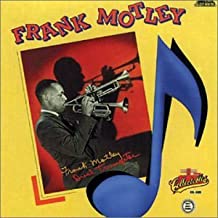
Frank Motley, Jr. was born December 30, 1923 in Cheraw, South Carolina and took trumpet lessons when he was young from Dizzy Gillespie, who was from the same town. He developed a technique of playing two trumpets at the same time, becoming known as “Dual Trumpet” and “Two Horn” Motley. Getting a degree in mechanical engineering at South Carolina State College, before joining the military, he performed in the Navy Band entertaining troops in the Pacific. After the end of the war he played in nightclubs in New York City before settling in Washington, D.C. and forming his own band in 1949.
He recorded extensively for Lillian Claiborne’s DC Records from 1951, and many of his recordings were licensed to other labels including RCA Victor and Specialty. His band, the Motley Crew, included singer and keyboardist Curley Bridges, drummer Thomas E. “TNT” Tribble, and vocalist Elsie “Angel Face” Kenley.
From 1952, he played mainly in Canada, marrying and moving to Toronto in 1955. However, he continued to perform and record in the United States. His biggest commercial success came in 1963, when his version of William Bell’s song Any Other Way, recorded with vocalist Jackie Shane for a small Boston label.
Disbanded the Motley Crew in 1966 he formed a new band in Toronto, the Hitch-Hikers, at first with Shane and then with singer Earle The Mighty Pope Heedram. The band broke up in 1970 but he continued to perform with another new band, the Bridge Crossings, until the mid 1980s. With his health declining he retired to Durham, North Carolina, where he continued to play in local dance bands. Trumpeter Frank Motley, who also sang, passed awayin Durham in 1998, aged 74.
More Posts: bandleader,history,instrumental,jazz,music,trumpet
Three Wishes
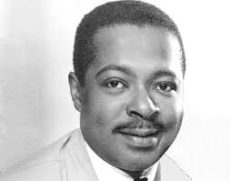
Having asked Wynton Kelly of his three wishes he responded to Nica with these answers:
- “To make some money.”
- “More money.”
- “To get around my instrument a little more.”
*Excerpt from Three Wishes: An Intimate Look at Jazz Greats ~ Compiled and Photographed by Pannonica de Koenigswarter

More Posts: baroness,history,instrumental,jazz,music,pannonica,piano,three,wishes
Daily Dose Of Jazz…
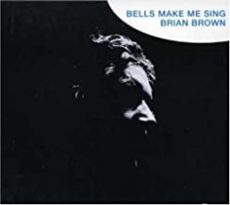
Brian Ernest Austin Brown was born on December 29, 1933 in Melbourne, Australia and was a self-taught player and emerged in the 1950s, a leading figure in Australia. He performed as a soloist and with his own ensembles since the mid-1950s throughout Australia and in Scandinavia, United States, Japan, United Kingdom, Italy, Spain, the Netherlands, Brunei and Germany.
In early 1956 Brown returned to Melbourne from Europe and formed the Brian Brown Quintet with drummer Stewie Speer, trumpeter Keith Hounslow, schoolboy pianist Dave Martin and bassist Barry Buckley. The new hard bop band was a regular from 1955 to 1960 at Horst Liepolt’s Jazz Centre 44 in St Kilda, Victoria, Australia. They introduced bop to Melburnians, a musical style largely unheard in Australia.
He made eight albums over an 18-year period heading various groups. Touring Europe with his Australian Jazz Ensemble in 1978, Brian also led groups doing experimental and original classical pieces from 1980 to 1986.
As an educator, he founded the Improvisation Studies course at the Victorian College of the Arts, where he taught from 1978 until his retirement in 1998. He appeared at the World Saxophone Congress in Tokyo in 1988, with Tony Gould. In June 1993 he was awarded the Order of Australia for service to the performing arts.
Soprano and tenor saxophonist, flutist, synthesizer, panpiper, leather bowhorn, composer, and educator Brian Brown passed away on January 28, 2013.
More Posts: composer,educator,flute,history,instrumental,jazz,leather bowhorn,music,panpipes,saxophone,synthesizer
Daily Dose Of Jazz…
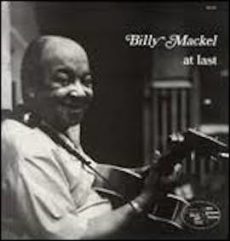
Billy Mackel was born John William Mackel on December 28, 1912 in Baltimore, Maryland and played banjo early in his career, but like many banjoists of his time he switched to guitar.
He led a band early in the 1940s, then joined Lionel Hampton in 1944 and spent the next thirty years with him. In the 1940s he also recorded with Milt Buckner, Arnett Cobb, Herbie Fields, and others, and worked with Billy Williams in the 1960s.
Guitarist Billy Mackel, who played left~handed and recorded as a leader, passed away on May 5, 1986.
More Posts: bandleader,guitar,history,instrumental,jazz,music
Requisites
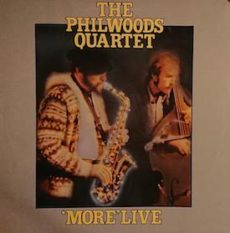
‘More’ Live ~ The Phil Woods Quartet | By Eddie Carter
Alto saxophonist Phil Woods was one of the unsung heroes of jazz, he was equally adept at Cool Jazz, and Hard-Bop with a gorgeous tone, and speed of execution that never failed to please his fans. ‘More’ Live (Adelphi Records Inc. AD 5010) is the second live session that The Phil Woods Quartet performed at The Armadillo World Headquarters in Austin, Texas during 1978 and 1979. It hit the stores in 1981, following their 1980 album, The Phil Woods Quartet Live, Volume One, featuring Mike Melillo on acoustic piano, Steve Gilmore on acoustic bass, and Bill Goodwin on drums. My copy used in this report is the 1981 US Stereo album.
Side One opens with Miles Davis’ Milestones. Phil is excellent on the lead solo, backed only at first by Steve and Bill. Mike joins them, then takes over on the second interpretation. Steve’s bass dances brightly on the third reading and Bill has the last word in an exchange with Phil and Mike before the reprise and close. Eiderdown by Steve Swallow kicks off with a five-minute performance by Gilmore who solos impressively. Woods launches into the next statement with inspired exuberance and Melillo takes care of business on the closing chorus.
Horace Silver’s Strollin’ begins Side Two in a relaxed vein for the ensemble’s theme. Mike kicks off the solos with a vivaciously spirited interpretation. Phil moves into the spotlight next with a soulful tone and agility that builds to a compelling conclusion. Steve shines on the closing statement with a quiet intensity ahead of the foursome taking the song out. Mike Melillo’s See Hunt and Liddy begins with a lovely introduction by the pianist developing into the quartet’s sprightly mood on the melody. Melillo lays down a solid groove on the opening statement that delivers the goods. Gilmore’s bass takes a brisk trip through the next reading, and Woods turns up the heat with a vigorous, energetic closing chorus culminating with the group’s climax. The engineers for See Hunt and Liddy are Jim Finney, Mark LeBaron, and Hank Allrich. The men behind the dials of the remaining tracks are Cliff Carter, Fletcher Clark, and LeBaron. The ensemble is tight, the music is terrific, the album has an exceptionally good soundstage, and I’m very impressed with the sound quality.
In addition to playing the alto sax, Phil Woods was also proficient on the clarinet. Woods was married to Chan Parker for seventeen years, and Stepdad to her daughter, Kim. His discography is extensive with sixty records as a leader and many others as a sideman performing with some elite jazz musicians and pop vocalists. His final live performance was a tribute to Charlie Parker with Strings on September 4, 2015. He passed away from emphysema twenty-five days later on September 29 at the age of eighty-three. Now that I’ve found this one, I’ll certainly be on the lookout for its companion album. If you’re in the mood for some Post-Bop and are a fan of any LP’s by Phil Woods, I offer for your consideration, ‘More’ Live by The Phil Woods Quartet. An album of sumptuous jazz that’s sure to satisfy almost any jazz appetite!
~ The Phil Woods Quartet Live, Volume One (Clean Cuts CC 702) – Source: Discogs.com
~ Milestones – Source: JazzStandards.com © 2020 by Edward Thomas Carter
More Posts: choice,classic,collectible,collector,history,instrumental,jazz,music,saxophone