
Daily Dose Of Jazz…
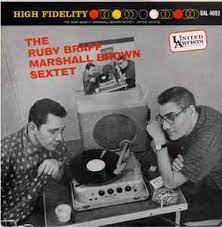
Marshall Richard Brown was born on December 21, 1920 in Framingham, Massachusetts and graduated from New York University with a degree in music. He was a band teacher in New York City schools, and one of his school bands performed at the Newport Jazz Festival in the 1950s.
With George Wein, he went to Europe to look for musicians for the International Youth Band. In the late 1950s he started the Newport Youth Band and his students included Eddie Gomez, Duško Gojković, George Gruntz, Albert Mangelsdorff, Jimmy Owens, and Gabor Szabo.
He worked with Ruby Braff, Bobby Hackett, Lee Konitz, and Pee Wee Russell. Valve trombonist and teacher Marshall Brown transitioned on December 13, 1983 in New York City. He was 67.

More Posts: adventure,educator,history,instrumental,jazz,music,trombone
Daily Dose Of Jazz…
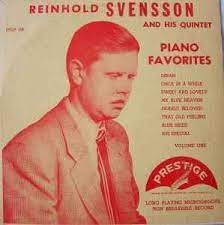
Reinhold Svensson was born December 20, 1919 in Husum, Germany. He recorded as a solo artist in 1941-1942, then joined the ensemble of violinist Hasse Kahn. In 1948, Putte Wickman took leadership of the group, and he worked with it until 1960 as a performer, arranger, and composer.
Reinhold appeared at the Paris Jazz Festival in 1949, worked with Arne Domnerus’s orchestra, and played with Charlie Norman in 1950-1951 as a duo under the names Ralph & Bert Berg and the Olson Brothers.
He also recorded with his own ensembles including Ragtime Reinhold. Domnerus, Jack Noren, Simon Brehm, and Thore Jederby were sidemen of his in the late 1940s and early 1950s.
Pianist, Hammond organist and composer Reinhold Svensson transitioned on November 23, 1968 in Stockholm, Sweden.

More Posts: composer,history,instrumental,jazz,music,organ,piano
Daily Dose Of Jazz…
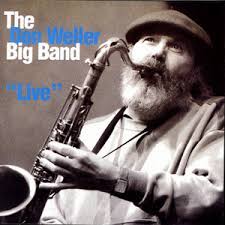
Donald Arthur Albert Weller was born on December 19, 1940 in Thornton Heath, Croydon, England. He began learning clarinet at the age of 14, and was classically educated for four or five years. He played the solo part in Mozart’s Clarinet Concerto at Croydon Town Hall aged 15, and began performing in Dixieland bands around the Croydon area, before switching to tenor saxophone and playing in Kathy Stobart’s rehearsal band.
During the 1970s he formed a jazz-rock group called Major Surgery that played a regular weekly gig at a local pub, the Dog & Bull. They played Weller’s compositions on the album released as The First Cut. This was followed by a quartet with drummer Bryan Spring and at the same time Don worked regularly with pianist Stan Tracey, and also with Harry Beckett and in a quintet with Art Themen. Renowned for his versatility, he has played with artists such as Alan Price, Tina May and Charlie Hearnshaw.
Weller played saxophone for rock records, working with the likes of David Bowie. He was the lead saxophonist with Tower of Power on the instrumental track Nascimento on Cat Stevens’ Back To Earth and also played on the Alex Harvey album The Mafia Stole My Guitar.
In the Eighties he stood in for Michael Brecker when the Gil Evans Orchestra played at the Bracknell Jazz Festival. This gig subsequently led to him touring the UK and recording with one of the band’s trumpeters, Hannibal Marvin Peterson, added on to the Weller–Spring Quartet. He went on to play and record with Evans’ British Orchestra, becoming a regular member of Rocket 88, as well as a first choice for TV and film soundtracks.
He contributed to several films composed for jazz big bands and was commissioned for his Electric Jazz Octet. Tenor saxophonist, and composer Don Weller had a triple bypass in 2012 and eight years later transitioned on May 30, 2020 in Croydon at the age of 79.
More Posts: bandleader,history,instrumental,jazz,music,saxophone

Daily Dose Of Jazz…
Jeanette Kimball was born Jeanette Salvant on December 18, 1906 in Pass Christian, Mississippi, the niece of blues pianist Isadore “Tuts” Washington. When she was seven she began playing the piano and as a teenager she performed as a professional musician with classical string formations, then in the field of jazz.
Moving to New Orleans, Louisiana she played in traditional jazz bands, first in 1926 in a “society” dance band, Papa Celestin’s Original Tuxedo Orchestra, with whom she went on tour in the southern United States. By 1929 she had married Celestin’s banjo and guitar player Narvin Kimball, and six years later left the band to raise their children. Post divorce, she retained Kimball and started her career anew in the mid-1940s. She went on to work with Buddy Charles, Herb Leary and Sidney Desvigne.
The 1950s saw Kimball working again with Papa Celestin, when he reactivated his band, which then was under the guidance of Papa French. She was a member of the Preservation Hall Jazz Band and played with Clive Wilson’s Original Camellia Jazz Band.
She appeared in 1976 on the Jazz Festival Breda live 1999 album Jeanette Kimball Meets the Fondy Riverside Bullet Band; their album Sophisticated Lady with Frank Fields and Freddie Kohlman. In the field of jazz, Jeanette worked between 1953 and 1991 on 72 recording sessions, among others with Alvin Alcorn, Paul Barbarin, Papa Celestin, Punch Miller and Johnny St. Cyr.
She left New Orleans in the 1990s to live in Ohio and South Carolina. Pianist Jeanette Kimball, received the Black Men of Labor Jazz Legacy Award in 1998, transitioned in Charleston, South Carolina, at the age of 94 on March 28, 2001.
More Posts: history,instrumental,jazz,music,piano
Requisites
Pannonica ~ Horace Parlan Trio | By Eddie Carter
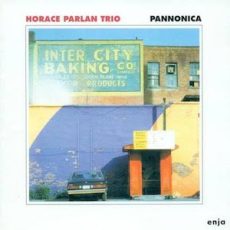
This morning’s album is by Horace Parlan, a pianist whose roots were deep in hard bop. I fell in love with his playing after hearing Movin’ & Groovin’ and The Complete Horace Parlan Blue Note Sessions. Pannonica (Enja Records 4076) is a 1984 release capturing The Horace Parlan Trio in performance at the Munich jazz club, The Domicile, on February 11,1981. Horace was stricken with polio as a child, resulting in the partial crippling of his right hand. It contributed to his developing a left-hand chord-voicing style and an ability to play rhythmic phrases with the right. He’s joined on stage by Reggie Johnson on bass and Alvin Queen on drums. My copy is the original German Stereo album.
No Greater Love, an abbreviation of the title There Is No Greater Love by Isham Jones and Marty Symes, begins the set with the trio’s energetic melody. Horace launches into a highly satisfying opening solo. Reggie comes in behind him with a vigorous statement. Alvin engages in an aggressive exchange with the pianist before the reprise and climax. The title tune, Pannonica, by Thelonious Monk, is one of his most beautiful compositions and opens with a solo piano introduction, segueing into the threesome’s delicately soft theme. Parlan treats the standard tenderly in the only solo, complemented by Johnson and Queen’s lush foundation into a gentle ending.
The first side closes with an enthusiastic rendition of C Jam Blues by Duke Ellington and Barney Bigard. The trio goes right to work with a lively melody. Horace leads the way with a vigorous solo. Reggie says his piece in the following reading. Alvin adds a bit of excitement in a spirited interpretation leading to the ensemble’s splendid finale. Randy Weston’s Hi-Fly starts Side Two with the trio’s inspired theme. Parlan is up first and stretches out in a beautifully constructed opening statement. Johnson takes the next turn, displaying an exemplary flow of ideas that builds to an effective climax.
The album closes with an old thirties song by George and Ira Gershwin, Who Cares? The trio opens with a medium-tempo melody as fresh as the fragrance after a summer rain shower. Horace takes the lead and brings out the sun in the first solo. Reggie responds with a compelling reading that flows nicely into the theme’s reprise and finish. Horst Weber and Matthias Winckelman produced Pannonica, and Carlos Albrecht recorded the album. This digital recording has an impressive soundstage that makes the instruments come alive through your speakers and places the listener in The Domicile audience as the musicians are performing.
Horace Parlan was one of jazz’s elder statesmen who constantly explored the individual possibilities of each tune he played with a sureness in his approach, which fueled his ability to improve with each new album continually. He, Reggie Johnson, and Alvin Queen make a fine team and demonstrate what a piano, bass, and drums could accomplish when firing on all cylinders. If you’re a fan of trio jazz, I invite you to consider Pannonica by The Horace Parlan Trio on your next record hunt. It’s one of the pianist’s best records and a very entertaining set that shouldn’t be missed for a spot in your library!
More Posts: choice,classic,collectible,collector,history,instrumental,jazz,music,piano