

Requisites
The First Set: Live At Minton’s ~ Eddie “Lockjaw” Davis & Johnny Griffin | By Eddie Carter
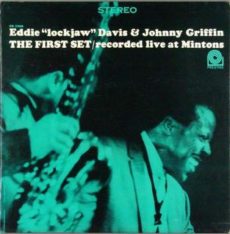
Up next from the library this morning is the second of four live sets at Minton’s Playhouse by The Eddie “Lockjaw” Davis~Johnny Griffin Quintet. The album released in 1964 is titled The First Set (Prestige PR 7309/PRST 7309) and the incredible trio of Junior Mance on piano; Larry Gales on bass and Ben Riley on drums anchors both saxophonists. The other three records are The Tenor Scene released in 1961, later reissued as The Breakfast Show in 1965. Live! The Midnight Show came out in 1964 and The Late Show also hit the stores in 1965. The club was founded by retired tenor saxophonist Henry Minton in 1938, becoming famous for its many jam sessions and is credited for the birth of Bebop during the forties. It’s also known for its role in the development of modern jazz during the fifties and if you’re new to this album and both saxophonists, Eddie is featured on the left speaker and Johnny is on the right. My copy used in this report is the 1971 Stereo reissue (PRT 7309).
The quintet starts the beat by giving the audience some heat on the album opener, Billie’s Bounce by Charlie Parker, a jazz classic written in 1945 that was named for the secretary of Dizzy’s agent, and trumpet player Billy Shaw. The tenor men lead the rhythm section on a sizzling theme treatment. Eddie ignites the first solo with a melodic explosion of jet-propelled verses. Junior steps in next glowing radiantly on a luminous statement, then Johnny produces a roaring fire on the closing solo. Both horns exchange a few more short riffs into the closing chorus.
The first of two Thelonious Monk originals, Epistrophy was written in 1941 with drummer Kenny Clarke and ends Side One. The quintet begins the quirky theme at midtempo, then Davis kicks off the solos with a very clever interpretation illustrating his firm-tone and remarkable phrasing. Junior makes a terrific impression on the second statement. Griff gives the third reading a bluesy beat that’s skillfully done and Larry delivers the final solo with an artistic maturity beyond his twenty-five years.
Side Two starts with the second Monk tune, Well, You Needn’t, composed in 1944 and dedicated to jazz vocalist Charlie Beamon, who when told the tune was going to be named after him replied: “Well, you need not”. The ensemble’s opening chorus has a contagious beat that’s suitable for dancing that Monk liked to do on stage during several of his songs. Eddie strolls along at a leisurely pace on the first solo, delivering a charmingly, cheerful performance. Junior gets the crowd to clap along on his superbly articulate solo next, then Johnny offers a resourcefully peppy reading. Larry concludes with a vivacious presentation with Ben providing perfect time and firm beat in support.
The finale is I’ll Remember April by Gene De Paul, Patricia Johnston, and Don Raye. This song made its debut in the 1942 Abbott and Costello comedy, Ride ‘Em Cowboy and is one of the most popular jazz standards. The quintet’s rendition is a fun tune to play and it swings from the start of the introduction. Eddie wails with an assertive tone and limitless effervescence on the lead solo. Junior cooks on the next reading with an electrifying statement, then Griff charges into the next solo with a robust workout of startling speed. Ben gives an equally high-octane performance during the closing chorus into the climax ending a lively jazz set.
The First Set like the other three albums together documents a single night’s work by The Eddie “Lockjaw” Davis-Johnny Griffin Quintet that was recorded by Rudy Van Gelder. Here, the legendary engineer makes magic with a beautifully recorded club performance with an excellent soundstage placing the listener in the audience for a “you are there” feeling. The album clocks in just under thirty-five minutes, but the artistry, music, and musicianship make The First Set-Recorded Live at Minton’s an attractive acquisition that merits a serious audition and consideration for any jazz lover’s library!
~ Live! The Midnight Show (Prestige PR 7330/PRST 7330); The Breakfast Show (PR 7407/PRST 7407); The Tenor Scene (PRLP 7191); The Late Show (PR 7357/PRST 7357) – Source: Discogs.com ~ Billie’s Bounce, I’ll Remember April, Well, You Needn’t – Source: JazzStandards.com ~ Henry Minton, Minton’s Playhouse – Source: Wikipedia.org © 2020 by Edward Thomas Carter Quick Synopsis
The First Set is a live album by saxophonists Eddie “Lockjaw” Davis and Johnny Griffin recorded at Minton’s Playhouse on January 6, 1961 and released on the Prestige label in 1964. The album was the second release from the recordings at Minton’s after The Tenor Scene. The night was produced by Esmond Edwards.
Track List
- Billie’s Bounce (Charlie Parker) – 8:43
- Epistrophy (Thelonious Monk, Kenny Clarke) – 7:17
- Well, You Needn’t (Monk) – 8:58
- I’ll Remember April (Gene de Paul, Patricia Johnston, Don Raye) – 8:05
- Eddie “Lockjaw” Davis, Johnny Griffin – tenor saxophone
- Junior Mance – piano
- Larry Gales – bass
- Ben Riley – drums

More Posts: choice,classic,collectible,collector,history,instrumental,jazz,music,saxophone
Daily Dose Of Jazz…
Lee Katzman was born on May 17, 1928 in Chicago, Illinois and was raised in Indianapolis, Indiana. His early career saw him playing primarily in big band settings. After arriving in New York in the late ‘40s, he played in the big bands of Gene Krupa, Claude Thornhill, Sam Donahue, Buddy Rich, Jimmy Dorsey, and Benny Goodman.
Relocating to California in 1956, he got an invitation from Stan Kenton to join the band as a jazz soloist, both on recordings and on worldwide tours. The late 1950s and 1960s saw him working with Pepper Adams, Les Brown, June Christy, Bob Dorough, Walter Norris, Med Flory, Bill Holman, Teddy Edwards, Mel Lewis, Shelly Manne, Les McCann, Anita O’Day, Jimmy Rowles, and Sonny Stitt.
Known for his clear tone and fearless, acrobatic solos, Lee was often a featured soloist in Bill Holman’s Great Big Band and Terry Gibbs Dream Band, as well as both the NBC and CBS orchestras. He later became a member of Herb Albert’s Baja Marimba Band.
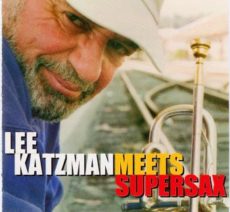
He recorded two sessions as a leader, Beautiful with Teddy Edwards on tenor saxophone, Jack Wilson on piano, bassist Leroy Vinnegar, and Nick Martinis on drums. His second was Lee Katzman Meets Supersax with Med Flory~alto saxophone, Jay Migliore~tenor saxophone, Ray Reed~tenor saxophone, Jack Nimitz~baritone saxophone, Jimmy Rowles~piano, Bob Magnusson~bass, and Donald Bailey~drums.
When he relocated to New York in 1980, he played informal gigs around town with John Bunch and reconnected with Bob Dorough and Walter Norris. He retired with his wife, Judy, to Taos, New Mexico in 2011 and trumpeter Lee Katzman passed away in Taos on August 1, 2013 at age 85.

More Posts: bandleader,history,instrumental,jazz,music,trumpet
Daily Dose Of Jazz…
Marlowe Morris, born May 16, 1915 in New York City, New York and learned drums, harmonica, and ukulele as a child. He accompanied June Clark from 1935 to 1937, then played solo for a few years before playing with Coleman Hawkins in 1940–41.
After serving in the Army during World War II, he worked with Toby Browne, Al Sears, Sid Catlett, and Tiny Grimes in addition to leading his own trio in the early and middle 1940s. Marlowe also appeared in the film Jammin’ the Blues in 1944. He quit playing full-time and worked in a post office in the late Forties, then returned in 1949 to play primarily solo organ.
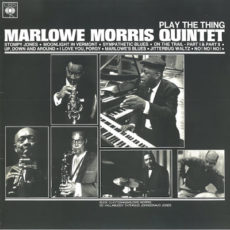
He led a trio in the 1960s with Julian Dash as one of his sidemen, recording for Columbia Records. Morris also recorded with Lester Young, Ben Webster, Big Joe Turner, Sister Rosetta Tharpe, Joe Williams and Jimmy Rushing.
A distant relative of jazz pianist Fats Waller, pianist and Hammond organist Marlowe Morris passed away on May 28, 1978 at the age of 63 in New York City.
More Posts: bandleader,history,instrumental,jazz,music,organ,piano
Daily Dose Of Jazz…
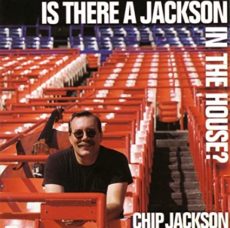
Chip Jackson was born on May 15, 1950 in Rockville, New York. He became a jazz bassist and over the course of his career, he became a member of the Chuck Mangione Quartet, Manhattan Jazz Orchestra, Pratt Brothers Big Band, Red Rodney Quintet, The Danny Gottlieb Trio, The Super Septet, Woody Herman And His Orchestra, Woody Herman And The Thundering Herd.
As a sideman and session musician, he has recorded with Al Di Meola, Teddy Edwards, Danny Gottlieb, Elvin Jones, Jack Walrath, Ernestine Anderson, Michael Wolff, Liza Minelli, Sonny Fortune, Anita O’Day, Ian Shaw Chris Connor, and Gerry Mulligan among others.
Bassist Chip Jackson, who was Billy Taylor’s favorite, continues to perform and record.
More Posts: bandleader,bass,history,instrumental,jazz,music
Daily Dose Of Jazz…
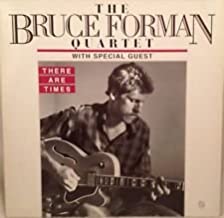
Bruce Forman was born in Springfield, Massachusetts on May 14, 1956 and first took piano lessons at an early age before picking up the guitar at age thirteen. In 1971, his family moved to San Francisco, California where he led his own groups in the area and performed with local jazz musicians, such as Eddie Duran, Vince Lateano, and Eddie Marshall.
He would go on to perform and record with nationally renowned musicians, such as Ray Brown, George Cables, Joe Henderson, Freddie Hubbard, Bobby Hutcherson, and Woody Shaw.
He performed regularly at the Monterey Jazz Festival and played with Richie Cole from 1978 to 1982. Bruce recorded his first of sixteen albums to date, Coast To Coast, in 1981. His most successful album as a leader was 1992’s Forman on the Job, which hit #14 on the U.S. Billboard Top Jazz Albums chart.
As a sideman he has recorded with Richie Cole, Clint Eastwood, Dan Hicks, Roger Kellaway, Mark Murphy, Charlie Shoemake, Lanny Morgan, Tom Harrell, Rare Silk, Dave Eshelman, Lorez Alexandria, Geoff Muldaur, Les DeMerle, Tony Monaco, Molly Ringwald, Chuck Deardorf. Guitarist Bruce Forman continues to perform, record and tour.
More Posts: bandleader,composer,guitar,history,instrumental,jazz,music