


Daily Dose Of Jazz…
Krzysztof Komeda was born Krzysztof Trzciński on April 27, 1931 in Poznań, Poland and grew up in Częstochowa and Ostrów Wielkopolski. He took music lessons from early childhood and became a member of the Poznań conservatorium at the age of eight, but World War II thwarted his plans. He explored the theory of music, and learned to play piano during this period.
While attending the Liceum for Boys, where he graduated from in 1950, he participated in the Music and Poetry Club. After high school he entered the Medical Academy in Poznań to study medicine. He finished his six-year-long studies and obtained a medical doctor diploma in 1956. He chose to specialize as a head and neck surgeon.
Komeda was interested in light and dance music and met Witold Kujawski, a graduate of the same school and already a well-known swinging bass player. He introduced him to jazz and took him to Kraków where the romantic period of Polish jazz, called the catacombs, was in the spotlight. Jam sessions with famous musicians as Matuszkiewicz, Borowiec, Walasek, and Kujawski took place in Witold’s legendary small apartment in Kraków.
Fascinated with be-bop performed by Andrzej Trzaskowski, his fascination with jazz and the friendship with famous musicians strengthened his connections with the music. He worked for some time with the first, postwar, pioneer Polish jazz band called Melomani. Later, he played with various pop groups, a Dixieland band before turning his attention to modern jazz and the creation of the Komeda Sextet.
Trzciński used the stage name ‘Komeda’ for the first time to protect his medical profession from the scutiny of those of Polish society who regarded jazz as a cheap suspicious music of night clubs. The sextet became the first Polish jazz group playing modern jazz, and its pioneering performances opened the way for jazz in Poland. He played jazz that related to European traditions and which was the synthesis of the two most popular groups at that time: The Modern Jazz Quartet and the Gerry Mulligan Quartet.
He would go on to tour Moscow, Grenoble, Paris, Copenhagen, Stockholm, Prague, Blend, Koenigsberg, Bulgaria and both West and East Germany. He was a part of a show called Jazz and Poetry, began scoring films and overall, Komeda composed more than 70 soundtracks. While staying in Los Angeles, California in 1968 he composed the film music for Roman Polanski’s Rosemary’s Baby and Kulik’s The Riot.
In 1968, in Los Angeles, while having a friendly rough-and-tumble with writer Marek Hłasko he was pushed over an escarpment and suffered a haematoma of the brain. Medical treatment in the US hospital did not save his life. After being transported home to Poland in a coma and in a terminal state. Pianst Krzysztof Komeda, who is credited with creating an original style, often described as the Polish school of jazz, hung on until passing away on April 23, 1969 at the age of 37.
More Posts: bandleader,composer,history,instrumental,jazz,music,piano
Daily Dose Of Jazz…
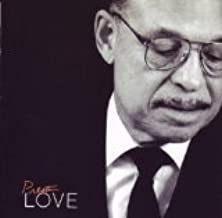
Preston Haynes Love, born April 26, 1921 in Omaha, Nebraska, grew up in the North Omaha and graduated from North High. He became renowned as a professional sideman and saxophone balladeer in the heyday of the big band era. He was a member of the bands of Nat Towles, Lloyd Hunter, Snub Mosley, Lucky Millinder and Fats Waller before getting his big break with the Count Basie Orchestra when he was 22. Love played and recorded with the Count’s band from 1945–1947 and played on Basie’s only #1 hit record, Open The Door Richard.
Love eventually became a bandleader and played behind Lena Horne, Billie Holiday, his friends Johnny Otis and Wynonie Harris, with whom he had several hits.
In 1952, he launched the short-lived Spin Records, as a joint effort with songwriter Otis René (When It’s Sleepy Time Down South). The label released material by the Preston Love Orchestra, among others.
As the music changed so did he and in the early 1960s Love moved to Los Angeles, California and began working with Ray Charles and Aretha Franklin, eventually becoming Motown’s West Coast house bandleader with whom he played & toured with The Four Tops, The Temptations, Tammi Terrell, Marvin Gaye, Gladys Knight, Smokey Robinson, Diana Ross, and Stevie Wonder among others.
He recorded with Nichelle Nichols, Janis Joplin, Frank Zappa, Shuggie Otis, T-Bone Walker, Charles Brown, Ruth Brown, and many others. Preston also appears in the Clint Eastwood film Play Misty For Me with the Johnny Otis band. He toured the U.S. and Europe quite frequently into the 2000s, additionally lecturing and writing about the history he was part of.
In his later years Love moved back to Omaha, wrote a book, led bands, the last of which featured his daughter vocalist Portia Love, drummer Gary E. Foster, pianist Orville Johnson, and bassist Nate Mickels. He was an advertising agent for the Omaha Star, a local newspaper serving the city Black community.
A recipient of several awards and honors including induction into the Omaha Black Music Hall Of Fame, saxophonist, bandleader, and songwriter Preston Love, who released three albums as a leader, passed away on February 12, 2004, after battling prostate cancer.
More Posts: bandleader,history,instrumental,jazz,music,saxophone,songwriter

Daily Dose Of Jazz…
Digby Fairweather was born Richard John Charles Fairweather in Rochford, Essex, England on April 25, 1946. Before becoming a professional musician, he was a librarian, which embarked him on a lifetime interest in jazz bibliography and archiving.
In 1971 he led his first band, Dig’s Half Dozen, and recorded in 1973 with Alex Welsh. Four years later he was a member of the band Velvet with Ike Isaacs, Len Skeat, and Denny Wright, then a member of the Midnite Follies Orchestra and the Pizza Express All-Stars.
The early 1980s saw Fairweather starting a band that performed music by Nat Gonella. He worked as a sideman for George Chisholm, Alex Welsh, Tiny Winters, and Brian Priestley. Through the 1980s and ’90s he led the Jazz Superkings, the Great British Jazz Band, and the Half Dozen.
From 1992 to 1998 he pursued a parallel career as a broadcaster on BBC Radio and Jazz FM, occasionally deputizing Humphrey Lyttelton on his show Best of Jazz and successively presenting Jazz Parade and Jazz Notes. He was also part of the Salute to Satchmo.
Fairweather and Stan Barker started the Jazz College charity to introduce improvisation in schools. He established the Association of British Jazz Musicians and the National Jazz Foundation Archive. He wrote Jazz: The Essential Companion in 1987 with Brian Priestly and Ian Carr. In 2000 it was renamed The Rough Guide to Jazz.
Digby’s Half Dozen toured and recorded with singer George Melly, and in the later years of his career from 2003 to 2007. Apart from his playing and group leading, Fairweather wrote the book How to Play Trumpet. In 2016, founded The Jazz Centre (UK), a charity whose aim is to promote, preserve and celebrate the culture of jazz in all its forms.
Cornetist, author, and broadcaster Digby Fairweather, who has recorded nineteen albums as a leader, published four books and has received several awards for jazz, continues his career as a musician.
More Posts: author,bandleader,broadcaster,cornet,history,instrumental,jazz,music
Daily Dose Of Jazz…
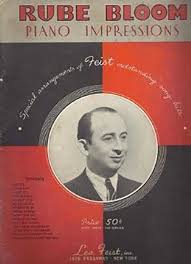
Reuben Bloom was born on April 24, 1902 in New York City, where he learned to play the piano. During the 1920s he wrote many novelty piano solos which are still well regarded today. He recorded for the Aeolian Company’s Duo-Art reproducing piano system various titles including his Spring Fever.
In 1927 Rube had his first hit with Soliloquy and his last hit was “Here’s to My Lady” in 1952, which he wrote with Johnny Mercer. In 1928, he made a number of records with Joe Venuti’s Blue Four for OKeh Records, including five songs he sang, as well as played piano.
He formed and led a number of bands during his career, most notably Rube Bloom and His Bayou Boys. They recorded three records in 1930 that are considered some of the best made during the early years of the Depression. The Bayou Boys was an all-star studio group consisting of Benny Goodman, Adrian Rollini, Tommy Dorsey and Mannie Klein. At other times, Bloom played with other bands, such as with Bix Beiderbecke and Frankie Trumbauer in the Sioux City Six as well as his continued frequent work with Joe Venuti’s Blue Four.
During his career, Rube also worked with many well-known performers, including Ruth Etting, Stan Kenton, Jimmy Dorsey. He collaborated with a wide number of lyricists including Ted Koehler, and Mitchell Parish. During his lifetime he published several books on the piano method.
Bloom’s I Can’t Face the Music with lyrics by Ted Koehler was recorded by Ella Fitzgerald on her 1962 Verve release, Rhythm is My Business, in a fabulous swing/big band version with Bill Doggett. Some of his best-known composition collaborations with lyricists were Day In, Day Out and Fools Rush In (Where Angels Fear to Tread) with lyrics by Johnny Mercer; Give Me the Simple Life with Harry Ruby; and Maybe You’ll Be There with lyrics by Sammy Gallop.
Pianist, vocalist, songwriter, arranger, bandleader, recording artist, and author Rube Bloom passed away on March 30, 1976 in his hometown.
More Posts: arranger,author,bandleader,history,instrumental,jazz,music,piano,recording artist,songwriter,vocal
Daily Dose Of Jazz…
Bobby Rosengarden was born Robert Marshall Rosengarden on April 23, 1924 in Elgin, Illinois and began playing drums when he was 12, and later studied at the University of Michigan. After playing drums in Army bands in World War II, he moved to New York City and worked in several groups between 1945 and 1948 before becoming a busy studio musician.
He played in the orchestras at NBC-TV from 1949–1968 and ABC from 1969–1974 on The Steve Allen Show, The Ernie Kovacs Show, Sing Along With Mitch, Johnny Carson’s The Tonight Show Band, and led the band for The Dick Cavett Show.
Through the years, Rosengarden was an active studio musician, recording with Duke Ellington, Billie Holiday, Skitch Henderson, Quincy Jones, Peter Nero, Gil Evans, Miles Davis, Gerry Mulligan, Benny Goodman, Moondog, Dick Hyman, Arlo Guthrie, Carmen McRae, Ben E. King, Harry Belafonte, Barbra Streisand, Jimi Hendrix, Stan Getz, Oliver Nelson, Jimmy Smith, Sylvia Syms, Milt Hinton, Derek Smith, Bob Wilber, Keny Davern, Walter Wanderley, Kai Winding and Tony Bennett.
In later years, Rosengarden was most often heard as the drummer with a variety of all-star, swing-oriented groups, including the Soprano Summit. Drummer Robert Rosengarden passed away from Alzheimer’s disease on February 27, 2007 in Sarasota, Florida, at the age of 82.
More Posts: drums,history,instrumental,jazz,music